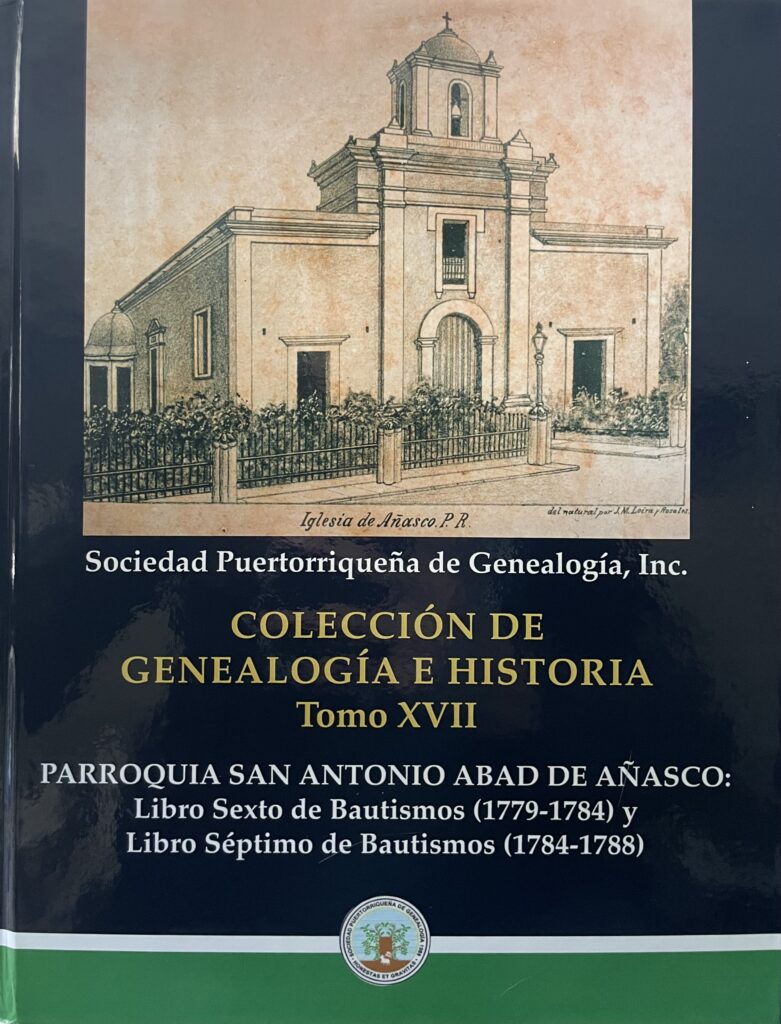
Recently, the Sociedad Puertorriquena de Genealogia published a new volume in its series on Anasco. This hefty tome features a historical essay by Dr. Andres Mendez Munoz and transcriptions of Libros 6 & 7 de Bautismos for the Parroquia San Antonio Abad de Anasco from the eighteenth century.
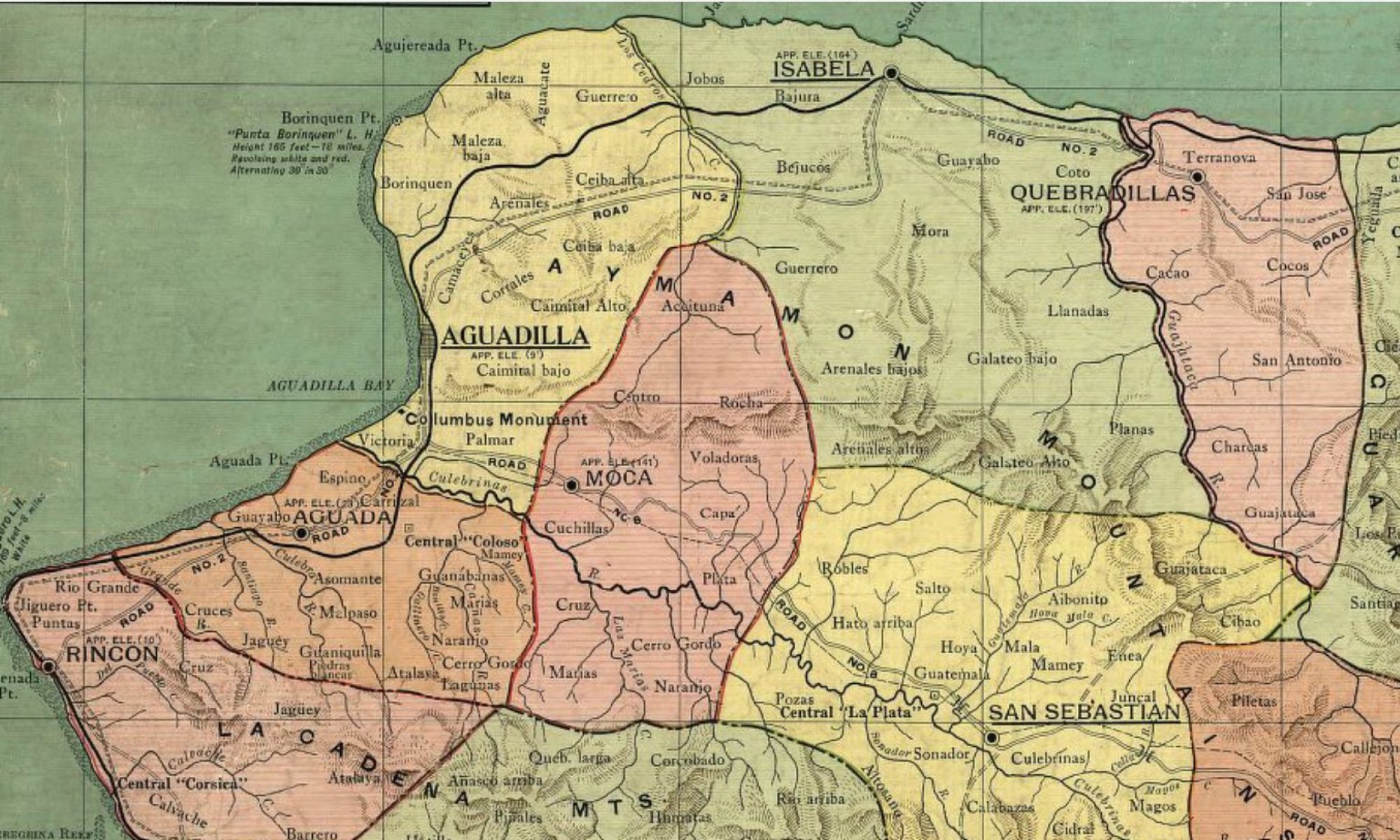
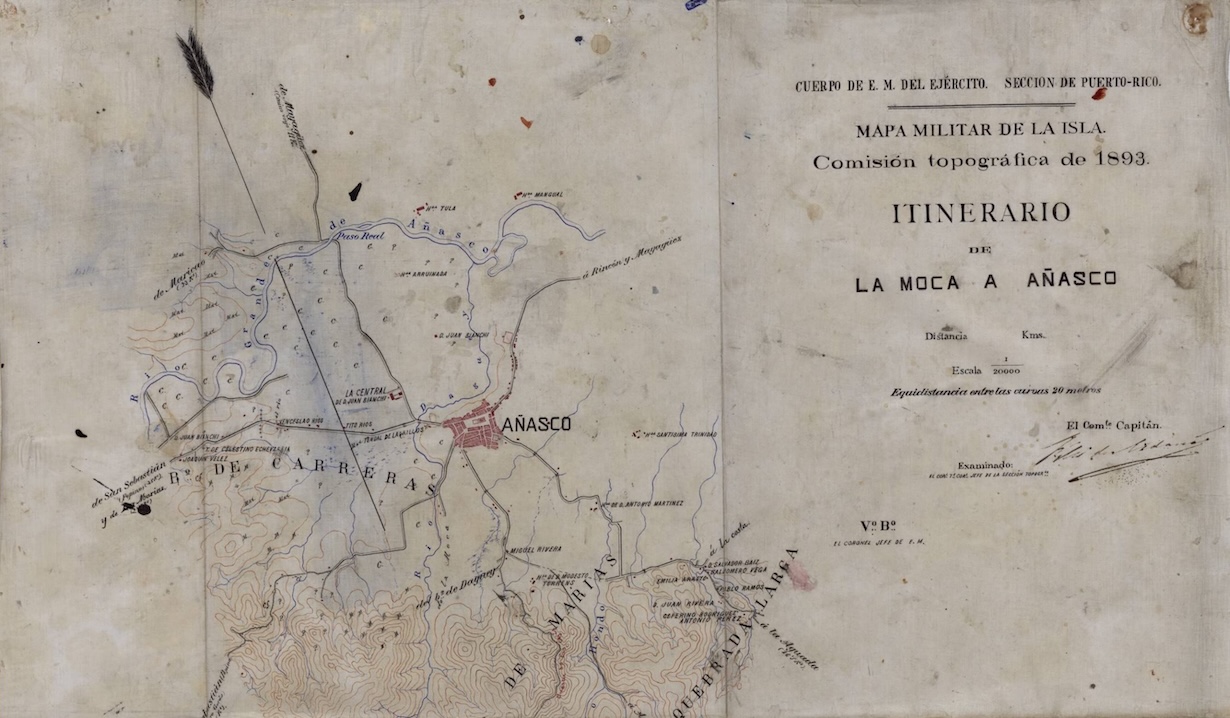
There’s over 200 pages of transcriptions of early families for this region of NW PR, which borders Aguada, Rincon and Moca on the north, San Sebastian and Las Marias on the east, and Mayaguez on the south. If your families lived near any of these boundaries, Anasco is worth a look for more information. Mendez Munoz’ 58 page essay helps with its early lists of military officers and soldiers, accounts of its founding and lists for those who participated. There are still copies available on SPG’s Quiosco on their website: https://genealogiapr.com
SPG, Colección de Genealogia e Historia Tomo XVII Parroquia San Antonio Abad de Anasco (2025)
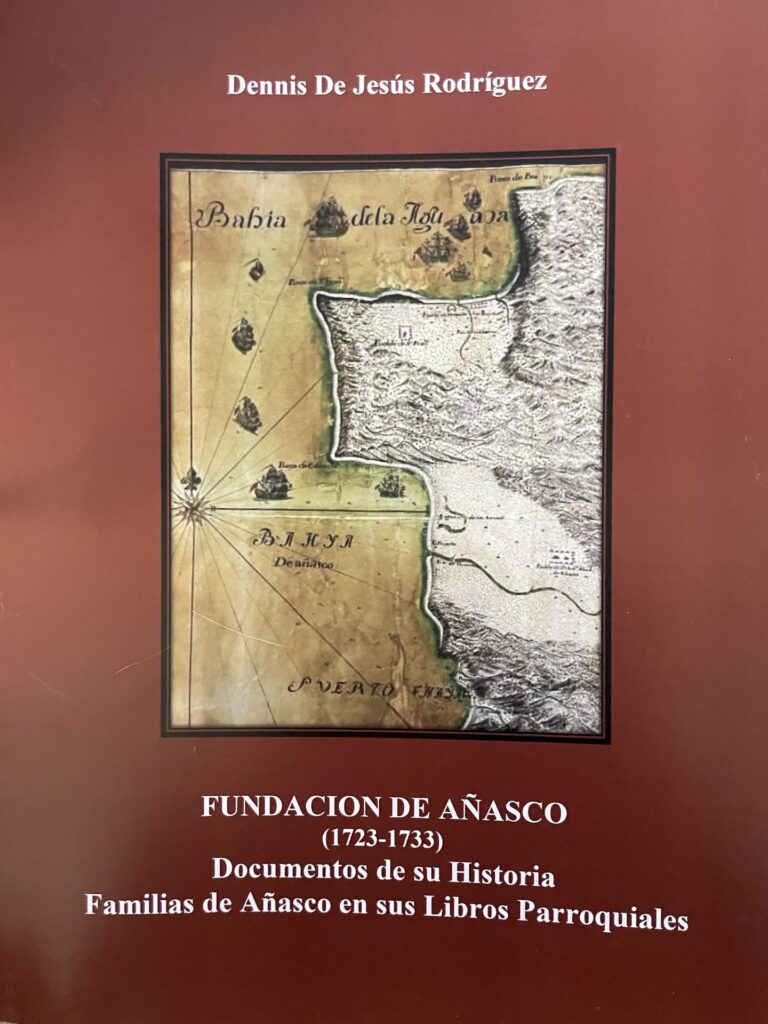
The other volume is Fundacion de Anasco by historian Dennis de Jesus Rodriguez and also covers the founding of Anasco through documents and family groups who appear in the volumes of parish records.
Dennis de Jesus Rodriguez, Fundación de Añasco
De Jesus’ volume contains documents relating to the foundation, along with the following transcriptions of Libro 3 Matrimonios (1778-1791), L4 (no existe), Libro 5 (1799-1807), Libro 6 (1807-1810), Libro 7 (1810-1814), L8 (1810-1816), L9 (1816-1827 – no existe), L10 (1827-1834), L11 (1835-1846), L12 (1846-1861) Matrimonios. For deaths, there are transcriptions of Libro 6 Defunciones (1808-1811), L7 (1811-1818), L8 (1815-1818), L9 (1818-1823), L10 (1823-1824), L11 (1825-1829). There are also Appendices, with some transcriptions of early books, lists of militia and samples of signatures of various government figures. This and other volumes of transcriptions are available directly from Dennis de Jesus.
Anasco has the distinction of being among the earliest parishes established in the eighteenth century, and these two volumes offer different and overlapping sources of data. While neither volume focuses on the Indigenous population of Anasco, I keep thinking of this quote from Jorge Chinea: “Despite the heavy losses, when Spain officially granted Añasco a town charter in 1733, almost all of its vecinos were Indians.” This was based on Fray Inigo Abad y Lasierra’s observations in his 1776 book, Viage a la America, in which he lamented that the population blended so “que casi todos son mezclas de blancos con Yndios, y de estos con zambos, mulatos y negros.”
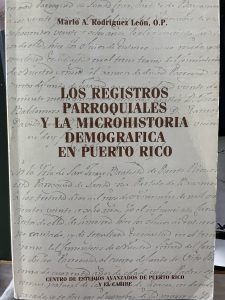
There are among the Registros Parroquiales (parish volumes) listed for Parroquia San Antonio Abad de Anasco, one for “Matrimonios, 1827-1873 Esc.” and another for “Bautismos 1815-1818 Esc” (Rodriguez Leon 230-231) Are these records transcribed?
If you’re working on Anasco, both books are definitely resources to have in your library!
References
Jorge Chinea, Race & Labor in the Hispanic Caribbean: The West Indian Immigrant Worker Experience in Puerto Rico, 1800-1850. University Press of Florida, 2005, 53.
Mario A. Rodriguez-Leon, OP “Parroquia San Antonio Abad de Anasco.” Los Registros Parroquiales y la microhistoria demográfica en Puerto Rico. San Juan: Centro de Estudios Avanzados de Puerto Rico y el Caribe, 1990, 230-231.
Here’s the initial 865 list followed by the municipalities that are in the Cajas recently uploaded to FamilySearch!
Listed below are: Isabela, Camuy, Vega Baja, San Juan, Utuado, Guayama, Juncos, Lares, Hormigueros, Manati, Rio Grande, Comerio, Carolina & last, that big cluster of School Personnel files. What can you find about your ancestors & their communities?
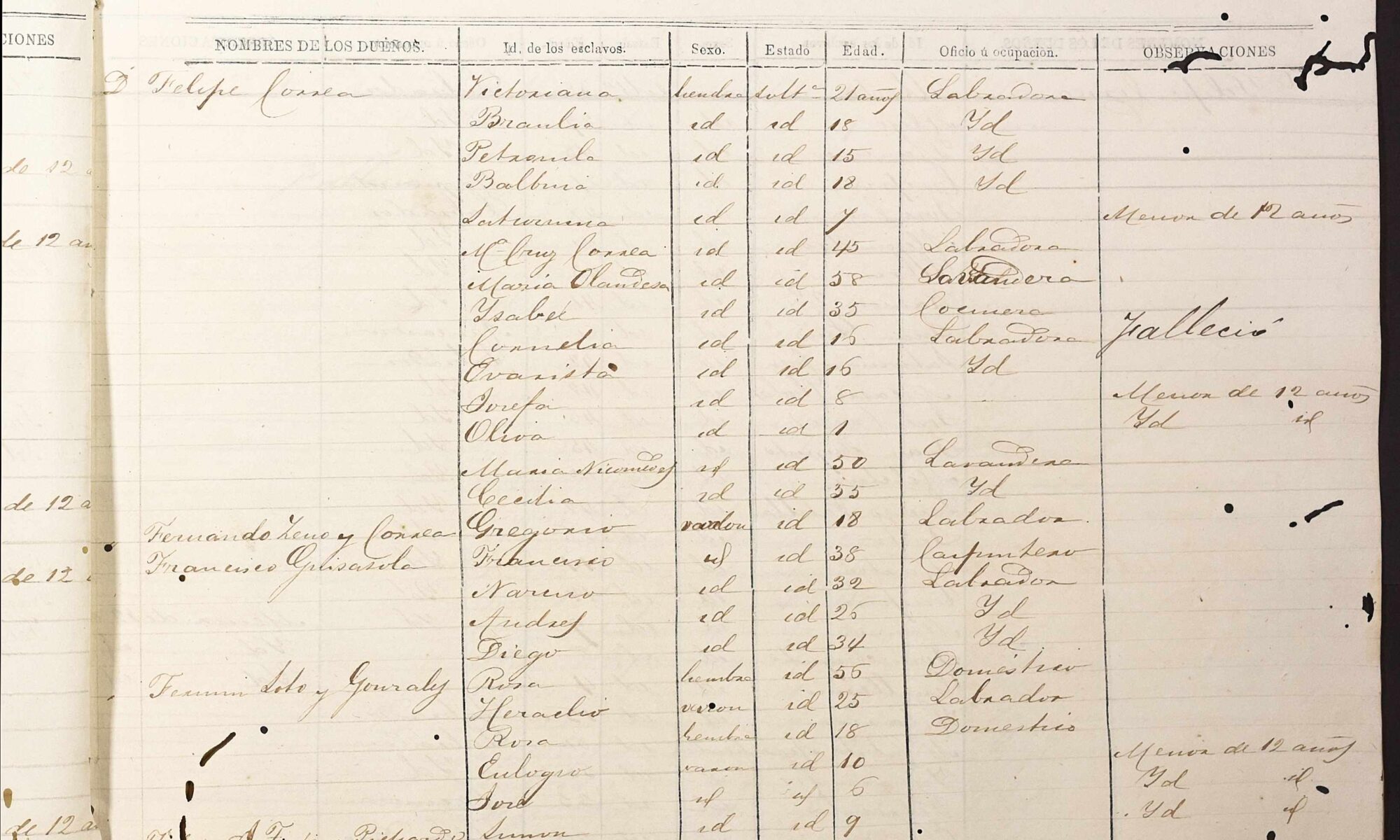
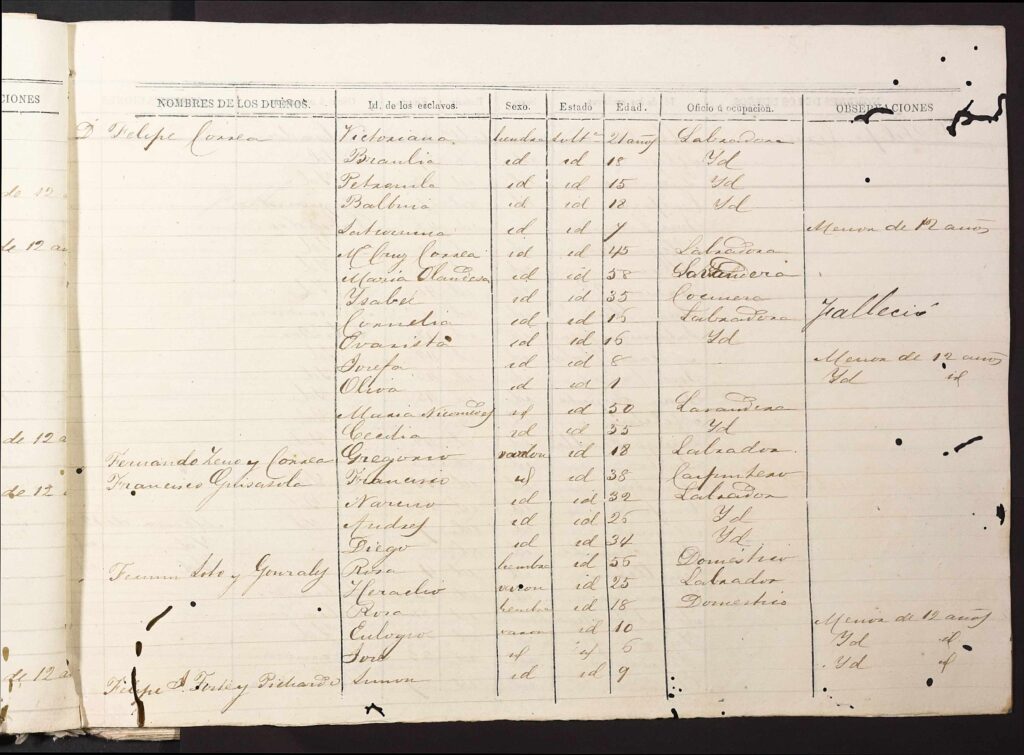
Caja 74, Padron de Esclavos, Arecibo, im 17. FamilySearch
Did you know that 865 sets of documents under Gobierno de Puerto Rico were recently uploaded to FamilySearch last December?
These aren’t indexed yet, but the Caja information and municipality are mentioned. While it’s not every municipality, it’s definitely worth a look!
Some of those included are Isabela, Camuy, Vega Baja, San Juan, Utuado, Guyama, Juncos, Lares, Hormigueros, Manati, Rio Grande, Comerio, Carolina & a big cluster of School Personnel files.
Here are some links to the results to help you get started:
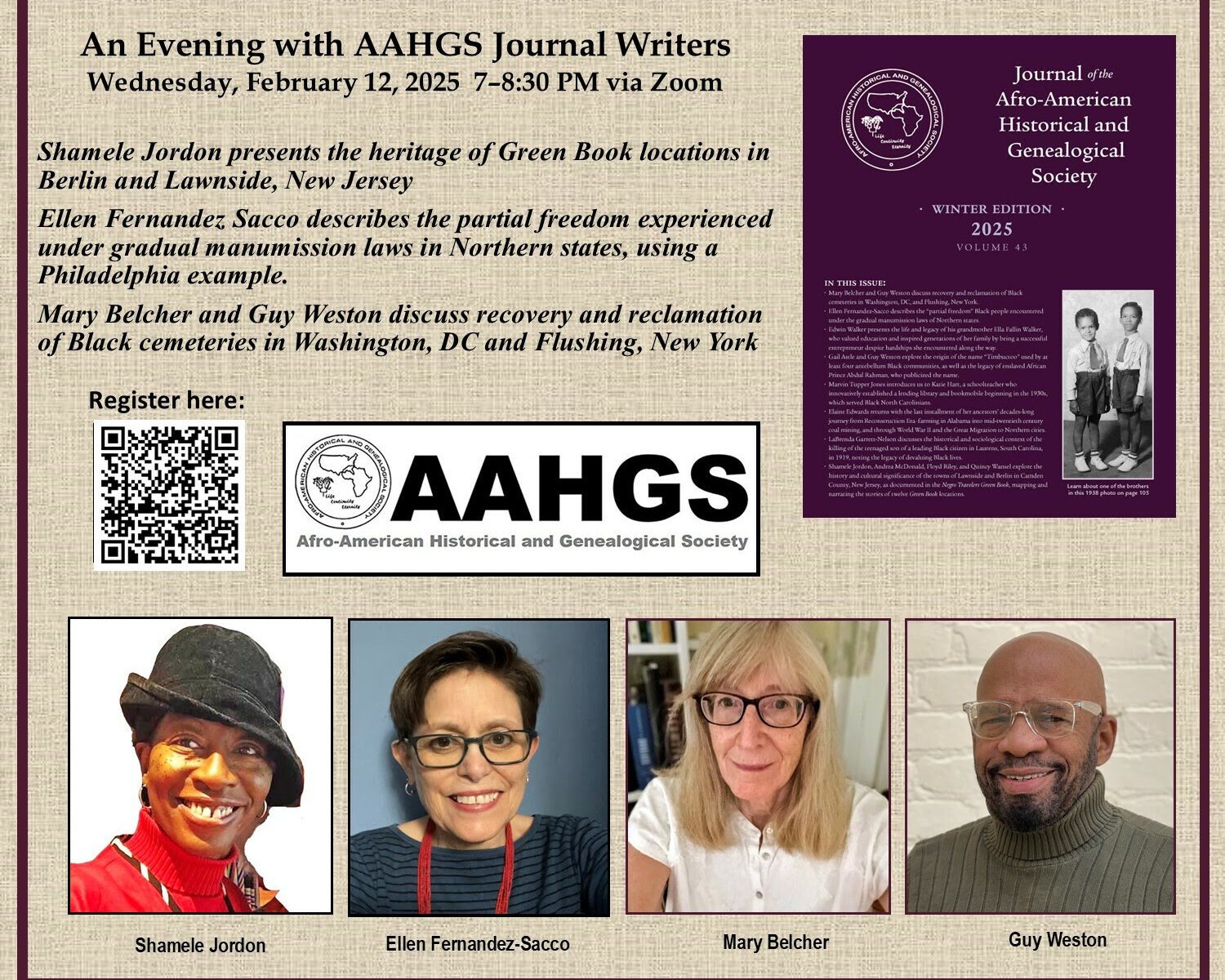
So happy to announce i’ll be talking about my recent publication in the Winter 2025 issue of the Afro-American Historical and Genealogical Society Journal, “Not Yet Completely Free: Gradual Emancipation and the Family of Moses Williams, 1776-1833.”
I’ll discuss the 1780 Gradual Emancipation Act in Philadelphia, part of the lesser known history of Northern slavery. By tracing the family histories connected to the silhouette artist and museum artisan and assistant Moses Williams (1776-ca 1833) one can catch sight of the challenges experienced by African descended and multiethnic Free People of Color in their emancipation process in this city. Williams was among the children of John and Phylis Williams, a couple held in bondage until 1786. He worked in the Philadelphia Museum of Charles Willson Peale from his childhood to adulthood and was manumitted about 1802.
Shamele Jordon will present on the heritage of Green Book locations in New Jersey, and Mary Belcher and Guy Weston will discuss recovery and reclamation of Black cemeteries in Washington DC and Flushing New York.
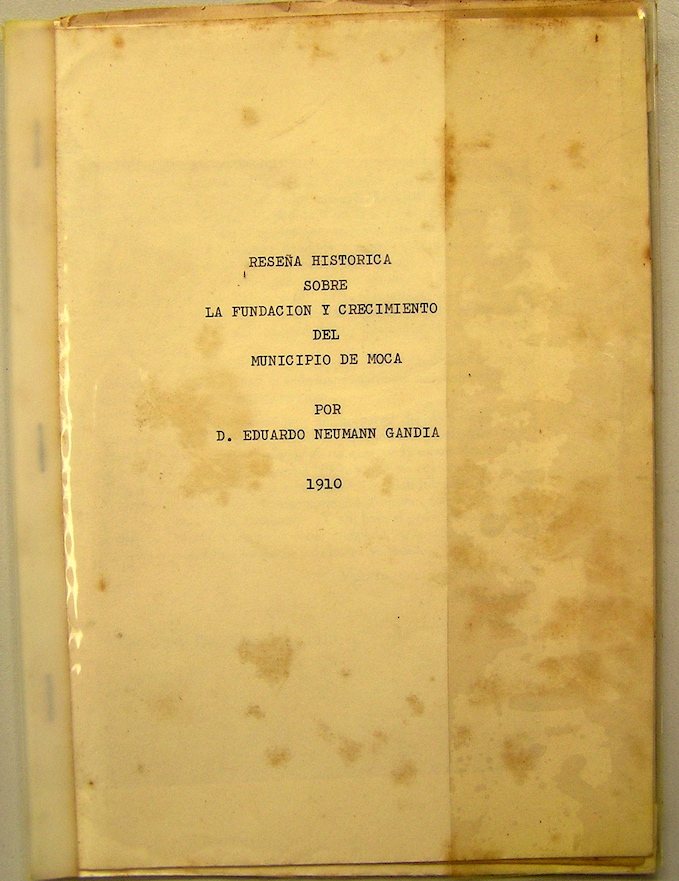
Two decades ago, I was in the Special Collections of U InterAmericana looking at their Herman Reichard Collection, where I photographed historian Eduardo Neumann Gandia’sResena historica sobre la fundacion y crecimiento del municipio de Moca of 1910. Despite the homemade cover, this was one publication of at least two tracts by Neumann Gandia that served to circulate a brief history of a municipality.
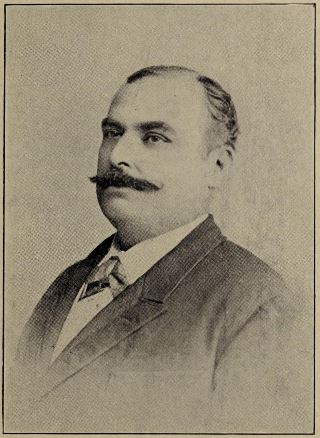
Eduardo Neumann Gandia (1852-1913)
It’s a brief 11 pages, taken from a larger work as can be seen from the numbered pages 79-90. There’s no mention of what the original text was. Nor do can we tell the entire volume was by a single author, or if it was a collection that includes multiple municipalities. He published his two volumes of Benefactores y hombres notables de Puerto-Rico: bocetos biográficos-críticos con un estudio sobre nuestros gobernadores generales, in 1896 and 1899, which contained mini-biographies of figures in government and business.
Herman Reichard Esteves (1910-2005), who preserved this pamphlet and other archival materials, was a librarian and professor based in Aguadilla. He was an avid genealogist whose work continues to inform many today, and which Dra. Haydee Reichard is making available through the Archivo Digital Nacional de Puerto Rico ADNPR.net. I made photographs of Neumann Gandia’s work, and (over 110 years later) ran it through an OCR program to make a PDF from the images.
You can download the pamphlet from the link at the bottom of the page.
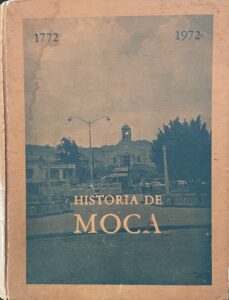
1972: Historia de Moca 1772-1972
This text was the basis for the 1972 bicentennial publication, Historia de Moca 1772-1972, produced by Sociedad Civico-Cultural Pro-Conmemoracion del Bicentenario de Moca, Inc. Published by the Dept de Instruccion Publica, Estado Libre Associado de Puerto Rico, both organizations spoke to a particular moment of identification on local and state level, and a recognition of a shared history that extends to the eighteenth century.
There is no mention of the fact that Moca is an indigenous name, nor of any survival in these pages. Additional information builds out Neumann Gandia’s brief history and benefits from photographs of the location and personages, as for the biography of the educator Adolfo Emeterio Babilonia Quinones (1841-1884). He married into the Yturrino family, whom i’ve written of in a previous post.
Cover, Historia de Moca 1772-1972. Edición bicentenario. Collection of the author.
Cultural Memory, ancestors & what gets overlooked…
The purpose of Neumann Gandia’s text and its later iterations was on the importance of a cultural memory. These local histories can be crucial for creating the microhistories of our ancestors on different parts of the island. This is not the same as a building a romanticized story of the past. Instead the intent is to write to reflect the struggle to live, have families or not, to stay or to go, to become part of groups that yielded forms of support, or produced a variety of creative expressions.
The 1972 book devoted two pages to mentions of enslavement: La Esclavitud Negra:(breves anotaciones) en Moca. There are a couple of paragraphs detailing the presence of enslaved people in Moca since its founding. Quoted is the 1945 interview by Luis M. Diaz Soler in Historia de la esclavitud negra en Puerto Rico. This excerpt acknowledges the experiences of Leoncia Lasalle and her daughter Juana Rodriguez Lasalle under bondage. Looking back at Resena, for early Puerto Rico, Neumann Gandia simply elides the topic (save for the statistics) yet the system of enslavement permeates the economic activity of the era he describes, the 1840s on.
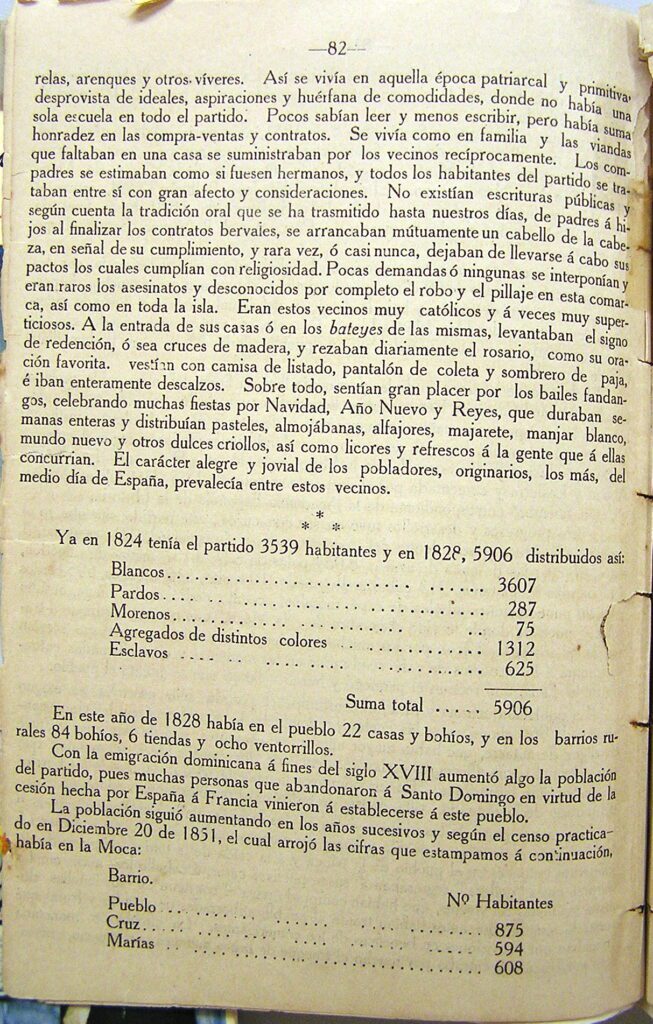
Neumann Gandia, Resena historica de sobre la fundacion y crecimiento del municipio de Moca Page 82
Neumann Gandia’s Moca of the 1840s, p.82
“…Así se vivía en aquella época patriarcal y primitiva desprovista de ideales, aspiraciones y huérfana de comodidades, donde no habia a sola escuela en todo el partido. Pocos sabían leer y menos escribir, pero había suma honradez en las compra-ventas y contratos. Se vivía como en familia y las viandas que faltaban en una casa se suministraban por los vecinos reciprocamente. Los compadres se estimaban como si fuesen hermanos, y todos los habitantes del partido se estimaban entre si con gran afecto y consideraciones. No existían escrituras públicas y según cuenta la tradición oral que se ha trasmitido hasta nuestros días, de padres á hijos al finalizar los contratos bervales, se arrancaban mútuamente un cabello de la cabeza, en señal de su cumplimiento, y rara vez, ó casi nunca, dejaban de llevarse á cabo sus pactos los cuales cumplían con religiosidad. Pocas demandas ó ningunas se interponían y eran raros los asesinatos y desconocidos por completo el robo y el pillaje en esta comarca, así como en toda la isla. Eran estos vecinos muy católicos y a veces muy superticiosos. A la entrada de sus casas ó en los bateyes de las mismas, levantaban el signo de redención, ó sea cruces de madera, y rezaban diariamente el rosario, como su oración favorita. vestían con camisa de listado, pantalón de coleta y sombrero de paja, é iban enteramente descalzos. Sobre todo, sentían gran placer por los bailes fandan-gos, celebrando muchas fiestas por Navidad, Año Nuevo y Reyes, que duraban semanas enteras y distribuían pasteles, almojábanas, alfajores, majarete, manjar blanco, mundo nuevo y otros dulces criollos, así como licores y refrescos á la gente que á ellas concurrian. El carácter alegre y jovial de los pobladores, originarios, los más, del medio día de España, prevalecía entre estos vecinos.“
“That is how life was in that patriarchal and primitive time devoid of ideals, aspirations and orphaned of accommodation, where there was not a single school in the entire region Few knew how to read and even less how to write, but there was honesty in sales and contracts. One lived as family and the vegetables that one household lacked was taken care of by the locals reciprocity. Godfathers treated each other as if they were brothers, and all the inhabitants of the area regarded each other with great affection and considerations. There were no public documents and after oral tradition that has been transmitted to the present, of fathers and sons finalizing their verbal contracts, each would pull a hair from the other’s head as a sign of fulfillment, and rarely, or almost never, left from taking to completion their pacts, which they accomplished religiously. Few demands or none were and rarely were there murders or unknowns who robbed and pillaged in this county as in the rest of the island. These inhabitants were very Catholic and very superstitious. At the entry of their homes or in the bateyes of the same, they raised the sign of redemption, that is to say, wooden crosses and daily recited the rosary as their favorite prayer. They dressed with striped shirts, canvas pants , a straw hat and went entirely barefoot. Above all they were greatly pleased by the fandango dances, celebrated many parties through Christmas, New Years and All Kings Day, that lasted entire weeks, and distributed pasteles, “almojábanas, alfajores, majarete, manjar blanco, mundo nuevo” and other local sweets, along with liquor and refreshments to those to whom they agreed with. The happy and jovial character of the original founders, more from the middle age of Spain prevails among these locals…”
Neumann Gandia lays out a different world for the early nineteenth century. His was not an inclusive history, and the only cultural source recognized is European. AfroIndigenous or African cultural survivals or influences are not mentioned. This was instead a peasant society composed of a superstitious and illiterate populace prone to violence, whose ‘happy character’ is simply an expression of early Spanish culture. Look at those numbers though on p.82. Taking the categories of free and unfree together, the 2,299 BIPOC population is significant yet has no role in the historical scenario he sketched above.
The fact is that the island was a process of settler colonial society, with a system that required violence and the use of force to control the enslaved and sharecroppers ‘of various colors’ within a stratified society. Born in 1852, slavery shaped Neumann Gandia’s world. Freedpeople were very much around in 1910, and the process of emancipation terminated in 1886. Also interesting is that Neumann Gandia’s collection of Taino bird effigy bowls was purchased by Jesse Walter Fewkes. This remains for us to discuss in understanding our ancestors lives today and their world.
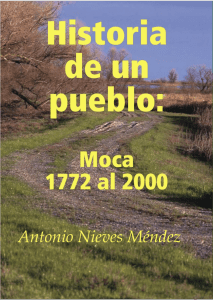
The best history of Moca is Antonio Nieves Morales’ Moca 1772-2000: Historia de un pueblo (Lulu.com, 2008). Nieves Mendez’ work is groundbreaking as a full history, one that includes tables listing enslavers and the enslaved, and his own connection to this past, via his family history.
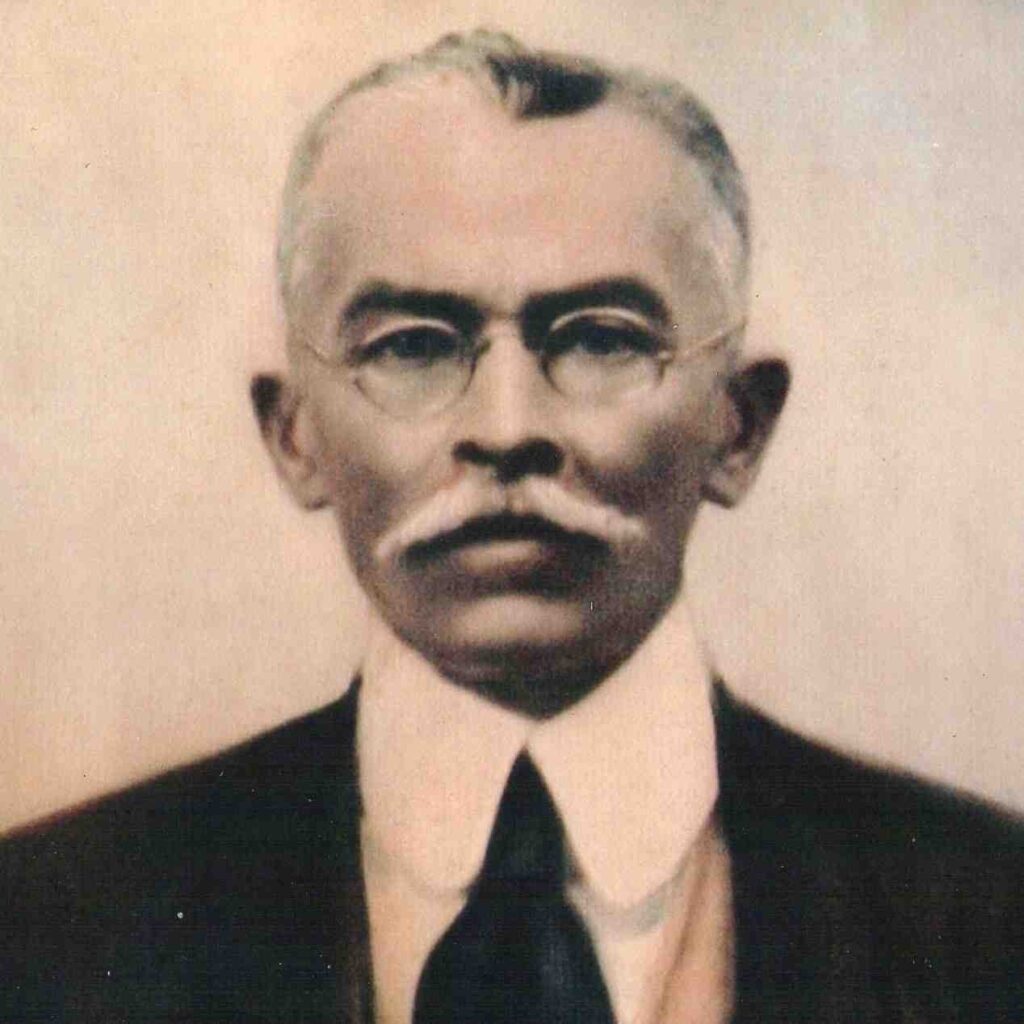
Miguel A. Babilonia Talavera, Alcalde de Moca
Lost is the original cover and the introduction to the section on Moca, a message by the mayor, Miguel A. Babilonia Talavera (1867-1947) who became Alcalde in 1899, and again from 1905-1910. He is my great uncle, brother to my great grandfather Ambrosio Alcides Babilonia Talavera (1860-1951), who I knew from my mother’s recollections of her childhood there.
He served as mayor after the annexation of Moca from Aguadilla took place in 1905. On pages 50-51, the 1972 Historia de Moca volume reproduces part of page 79 from the Neumann Gandia pamphlet as “Don Miguel A. Babilonia se despide de sus conciudadanos” written in December 1910.
Pedro Miguel Antonio Babilonia Talavera (1867-1947)
I want to express my deep thanks to all the members of the Babilonia family and their descendants, and members of SAMocanos for sharing their information and photographs with me over the years. I especially want to thank my cousin Gaspar Babilonia, for sharing his collection of his grandfather’s photographs.
Now digitized images of ancestors and their communities populate a variety of places on social media, another way that descendants can connect to their past. Neumann Gandia’s work is but one expression of this from over a century ago.
Part 3: Gathering Information & Pulling it all together
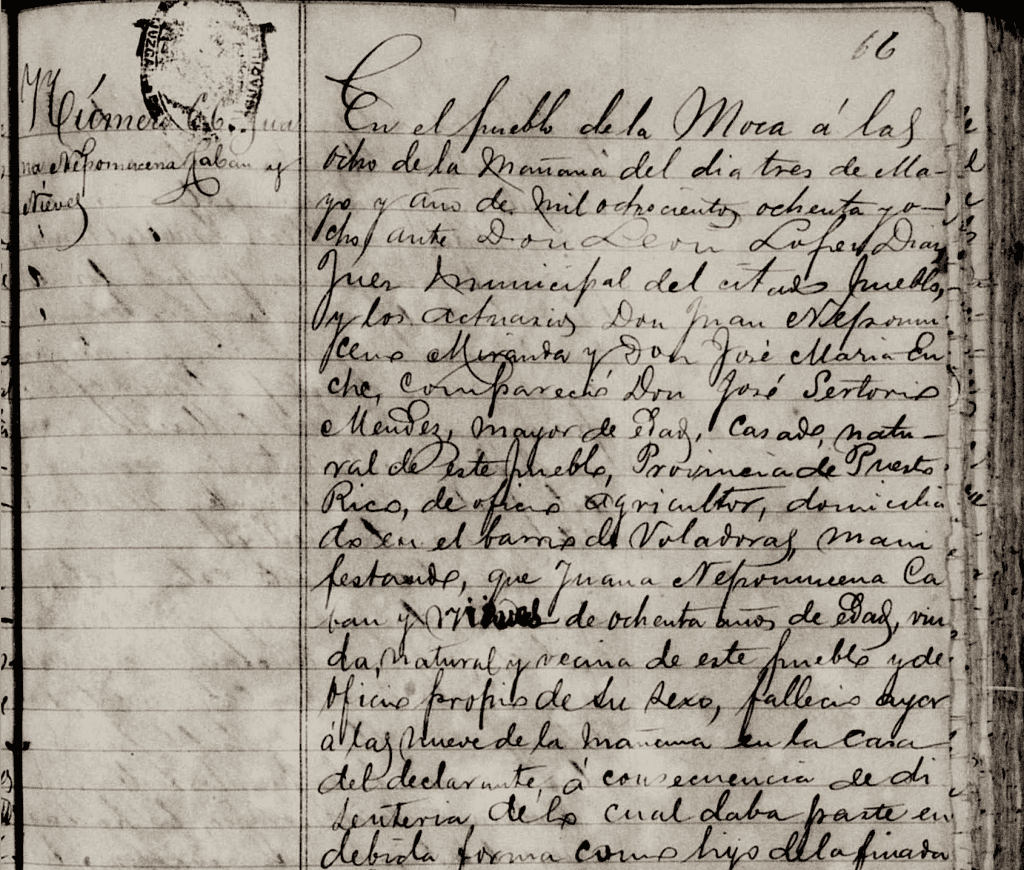
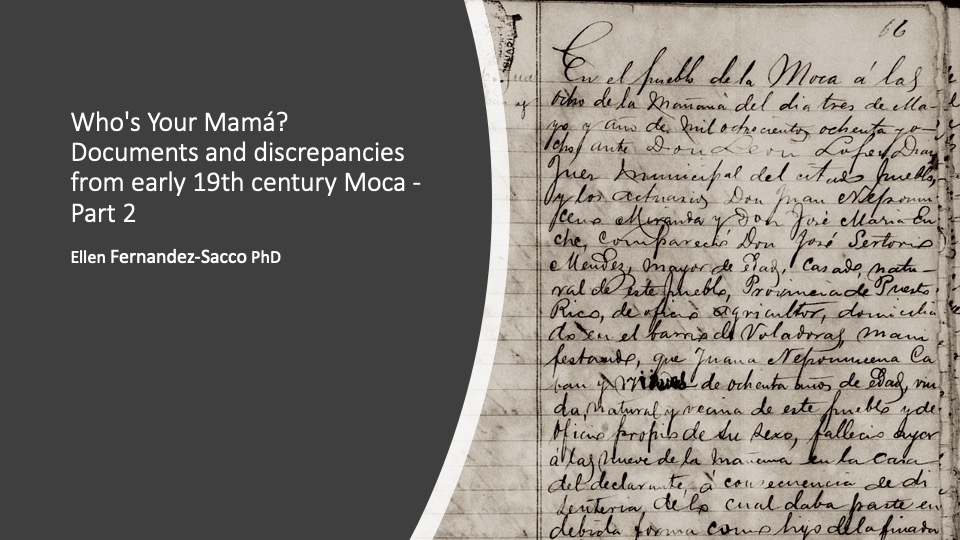
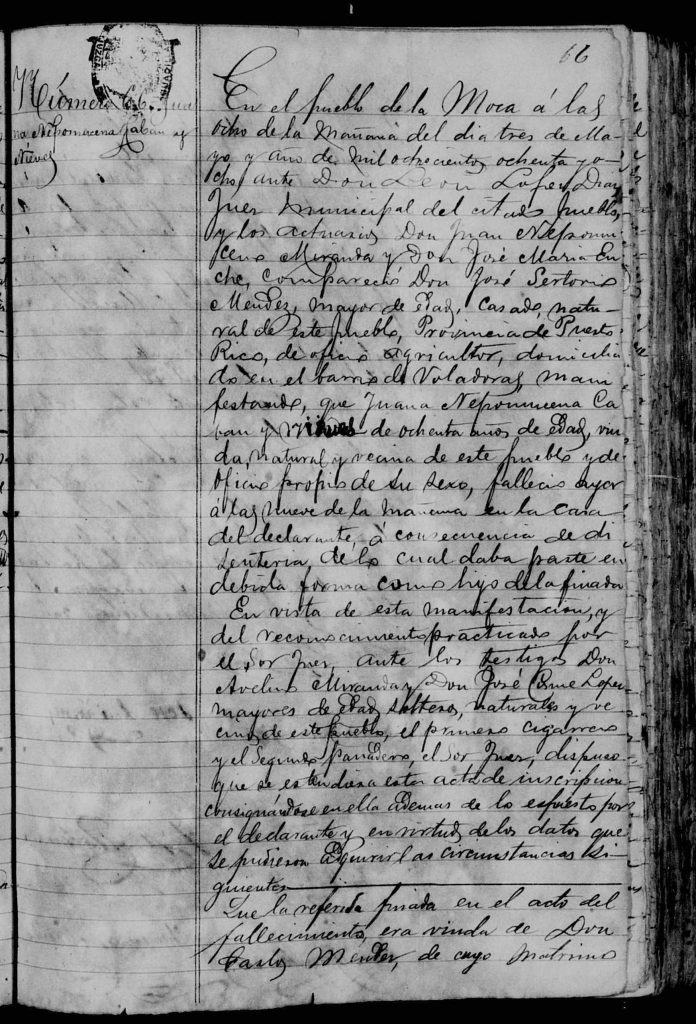
Excerpt, Juana Nepomucena Caban, Acta de defuncion, 1888
Gathering Data: What the Acta de Defuncion tells us
Four key facts can be gleaned from Juana Nepomucena Caban’s 1888 death certificate:
Juana Nepomucena Caban was of advanced age
Juana was widowed
she had 14 children with Carlos Mendez… and,
Carlos’ death preceded hers.
As Carlos Mendez is not in the Libro de defunciones, Registro Civil (Book of Deaths, Civil Register) for Moca or nearby municipalities, he probably died before 1885, the year this record set begins.
However, Carlos Mendez appears in land rentals and deeds for 1851 in notary documents. In Caja 1444 for Moca, he is mentioned as a neighbor in Barrio Cruz in two documents. Still, this bit of information helps place the family in a specific barrio (ward), adds a date, and can help in finding additional documents.
Steps
First, review the document in question– what information is there?
What questions do you seek to answer? What’s your research question?
Create a detailed extract, so you can focus in on the relevant details.
Make Your Own Extracts & Transcriptions
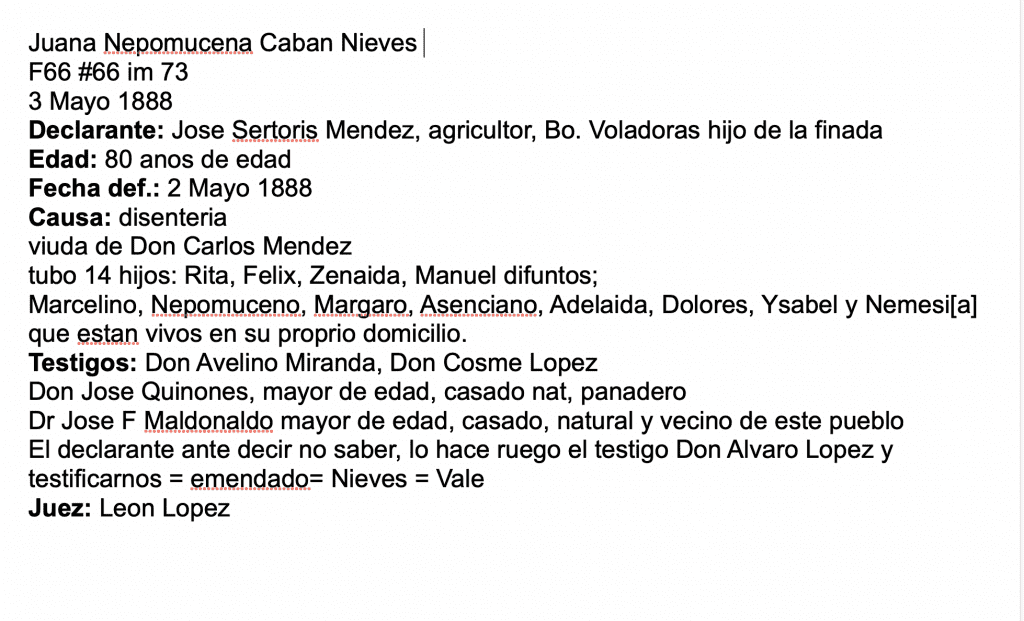
Given the handwriting across the documents in the Civil Registers, it’s often easier to refer to an extract than reread a document with difficult handwriting, so…
A good extract contains more than just a name and a date.
The informant (Declarante or Informante) is identified. This could be anyone from a relative, neighbor, doctor or local official, etc. depending on the circumstances.
Witnesses (Testigos) may or may not be relatives. Sometimes they were locals entrusted with signing off on documents and not related to the persons listed.
The informant’s identity can be a clue as to how reliable the information in the certificate is. Depending on the years, a birth, marriage or death record can provide the names of additional family members, neighbors or officials involved in the reporting of the event.
Officials- Before 1910, Juez de Paz (Justice of the Peace) Secretario or Encargados del Registro Civil (Secretary or Clerk of the Civil Register) appear at the start and end of documents.
Knowing who was the official can provide context. This might be connected to the family in some way, particularly if we are studying rural areas. The further back in time, the more likely this is the situation.
Additional observations:
Note any discrepancy between the date of the document registration and the date of the event. This can make quite a bit of difference in birth registrations- some people finally had their birth registered as adults. In terms of death records, the deceased is often buried the following day. It is unusual for the remains to be kept beyond 2-3 days prior to interment.
In early church records, the cemetery surrounded the church building, and municipal cemeteries come later. Later in the nineteenth century, cemeteries were moved out of the town centers, and established further away as a better understanding of illness and germs take hold and public health becomes a field of study. For Moca, the church was built in 1853, and the cemetery located a few blocks away. The old cemetery was moved about 1953.
Source the document, so you can locate the original (or its duplicate) in future. If it’s on FamilySearch, copy the Citation and paste it into your notes or genealogy program.
Reexamine the original document periodically– errors can enter when transcribing. You may find there’s a significant detail missed on the initial reading.
If you have access to original documents, learn to do your own transcribing and tackle that document. Just because a person is on someone’s tree, or it’s a database search result doesn’t mean it’s correct. Age, gender even surnames may be incorrectly noted.
Cause of death may point to health issues that run in a family, or mention of accidents, instances of deliberate harm, etc.
Older documents may list paternal and maternal grandparents in series of birth and death registrations.
This level of detail is helpful when you’re researching a brick wall, and notice most of this information doesn’t come up at all on the FS transcription, so definitely check out the document whenever possible.
Juana Nepomucena Caban [Nieves’] death certificate is available on FamilySearch ( & on Ancestry):
Information is knowledge: Reviewing what you’ve got
So, here is someone born near the start of the 1800s, a widow, identified as ‘white’, who had 14 children, ten of whom were still alive in 1888. We also have the name of her husband and the ward she died in.
Her son Jose Sertoris Mendez was the informant, and she was a widow. Note whether there is mention of a will— here, it’s not even mentioned.
Note that in this case, her son Jose Sertoris Mendez, like the majority of people who lived before 1900 in Puerto Rico, did not know how to write, and so, don Alvaro Lopez, signed on his behalf. This too has implications for records.
Who are Juana Nepomucena Caban’s Parents?
Yet, there’s an issue here— Juana Nepomucena Caban’s parents do not appear on the death certificate, which helps to confirm whether she actually is a Caban Nieves. Since she died a widow in 1888, both her death and that of her husband Carlos Mendez predates the first US Federal Census of 1910. As a search of the Civil Registration and the Index up to 1888 didn’t yield her husband, so he probably died before 1885.
What kind of documents are available? There are parish records, municipal documents and newspapers. If possible, secure a parish record from the Iglesia de Nuestra Señora de Monserrate in Moca. Check other trees, as there’s a chance another descendant may have already obtained one (hopefully with citations).
In this case, my cousin, Rosalma Mendez shared a set of extracts from the baptismal records that helped to fill in details that I’ve kept together with other early records. Working collaboratively, she is also a member of Sociedad Ancestros Mocanos. Before 2008, members of the group made transcriptions during appointments at the office of La Iglesia de Nuestra Señora de la Monserrate that we shared with each other. These lists can still contain surprises years later.
Estimating Timelines
Together with the birth year of the youngest child, a date range for Carlos’ death record can be figured out, and also a range for Juana’s childbearing years. Death records in Puerto Rico often have ages that are rounded up, and a largely rural existence paired with high rates of illiteracy meant many literally did not know when they were born.
Remember, since the person reporting is not the person named in the document (it’s a death certificate, right?), there can be errors in the information provided.
Ok, so let’s see what we can find out from records for her immediate family.
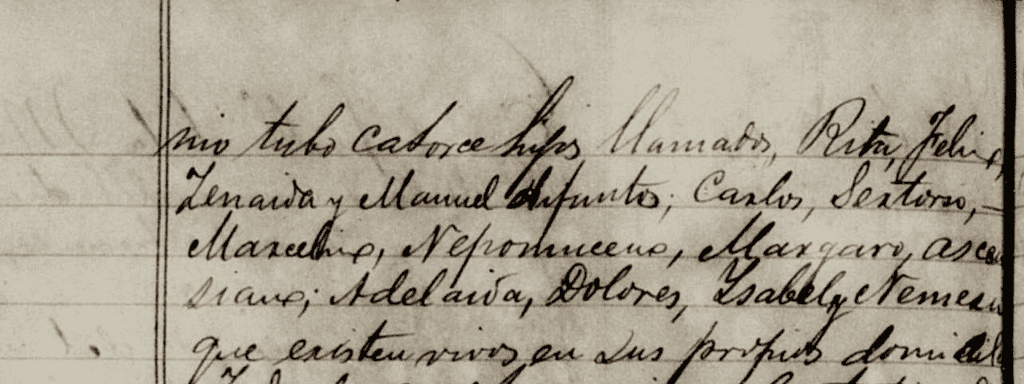
Excerpt, Acta de defunción, Juana Nepomucena Caban, 1888: 14 hijos
According to this Acta de Defuncion, Juana Nepomucena Caban and Don Carlos Mendez’ 14 children in the death record were:
Rita, Felix, Zenaida, Manuel deceased; Carlos, Sertoris, Marcelino, Nepomuceno, Margaro, Asenciano, Adelaida, Dolores, Ysabel y Nemesi[a] Mendez Caban.
Thanks to two additional records for Gregorio and Ermenegilda Mendez Caban, the couple’s total so far is actually 16 children. If a child died young, they may not be included among those listed in the parent’s death record, their Actas de Defuncion.
I used FamilySearch.org to locate a number of the records for the children, as these results can be more easily searched than in Ancestry.com‘s Puerto Rico Civil Registration record searches. On the other hand, both sites have family trees, and the large database that Ancestry has may turn something up, so it’s worth checking whether there are sources on the tree.
More questions… questioning death records
When I added the children’s information, I found was that their actual dates are much later than anticipated. This puts in question the 1808 year of birth from Juana Nepomucena’s age on the death certificate as eighty.
According to records, her births happened between 1832-1865. Children who died at young age are often left off the death certificates of their parents decades later, so it’s good to search the surname to find anyone else. Transcriptions for her children’s baptisms added very helpful details.
Ultimately, it turns out Juana’s age in the death record is incorrect, as her last child, (unmentioned among the children in her death record), is Ermenegilda Mendez Caban, born about 1865. Given Ermenegilda’s year of birth, if we use Juana Nepomucena Caban’s 1808 date means Juana was about 57, which is a little beyond childbearing years. The children’s years of birth range from 1832-1865, with a young mother born at ca. 1815- 1820.
How does that extra aging happen? Ages in death certificates are often rounded up, so a person can have an additional 5 to 10 years or more added on to get closer to 80, 90 or 100 years of age. Add the notation that records someone signed on behalf of the informant, is another clue that age can be a relative thing in these documents. The focus in daily life then was not so much on holding written documentation, but was dominated by the rhythm of the agricultural cycle. Much of the population during the nineteenth century was illiterate. Also, there were centenarians— but their records have more consistency in terms of age across time.
A maternal surname still missing…
We still need a record that will estabish Juana’s maternal surname, a big help when one is dealing with multiple families that share the same surname and a popular first name. Unfortunately, the records in the Civil Registers can fail to mention a maternal surname, or lack the name of a spouse or of parents. Depending on the time period, they can provide the names of parents and even grandparents. Having a single surname can be a clue to ethnicity and social status— POC in the earlier run of the Civil Register often appear with a single surname, for different reasons, because of former enslavement or birth to a single mother, or even father.
Thanks to Rosalma, the cousin who shared those transcriptions of baptism records for two of Juana and Carlos’s children- Gregorio and Maria Cenaida (Zenaida) Mendez Caban — we now see conflicting surnames for their maternal grandparents. For Gregorio, the maternal grandparents are Juan Caban and Juana Hernandez, and for Maria Cenaida, they are Juan Caban and Juana Lopez.[1]
Whenever possible, check the original and cross reference to determine whether the error was made in transcription or by the recording secretary or, the informant.
As there are no documents for Gregorio Mendez Caban in the Civil Registration, he probably died at a tender age, and the baptismal record is likely all that’s available on him.
It’s also possible that Juana Nepomucena’s potential mother, Juana Hernandez, has both surnames in question as Juana Hernandez Lopez. Women in records prior to the eighteenth century and into the nineteenth century— could appear under either their mother’s or father’s surname, emphasizing the maternal line, or out of paternal recognition later on.
Still, even with the conflicting information, we have the names of Juana Nepomucena Caban’s father and her mother’s first name: Juan Caban and Juana —. As of yet, there is no further information regarding a possible second marriage for Juana’s husband Carlos Mendez.
And here we are…
So, based on two baptismal records, Juana Nepomucena was not a Caban Nieves after all. There is a discrepancy, and whether she was a Caban Hernandez or a Caban Lopez still remains to be resolved. That’s ok.
And often, it can’t be done alone, and best done in community to share the bits that may hold the answer to the mystery. You don’t have to go it alone, so look for groups sharing information about a given geographic area or for Puerto Rican genealogy overall. Ask. Between the years 1850 and 1888, details can certainly change across documents, and that’s why we need to do exhaustive searches.
If you’re related, or have info on Carlos Mendez or Juana Nepomucena Caban, please share!
References
[1] APNSMM Bautismos, Libro 15 21/MAR/52 nació: 6/p pg. 15 v; Maria Cenaira HL Carlos Méndez y Juana Caban; Abuelos paternos: Federico [Francisco] Méndez y Rosa Hernández; Abuelos maternos: Juan y Juana López; Padrinos: Silverio Aviles y Maria Adelaida Méndez;
22/MAY/1859 nació 9/MAY días pg. 49v Gregorio HL: Carlos Méndez y Nepoconucema Caban. Abuelos Paternos: Francisco Méndez y Rosa Hernández; Abuelos Maternos: Juan Caban y Juana Hernandez Padrinos: Juan de la Cruz Hidalgo y Maria Adelaida Mendez Transcriptions courtesy of Rosalma Mendez, 2006.
Documents and Discrepancies from Early 19th C Moca
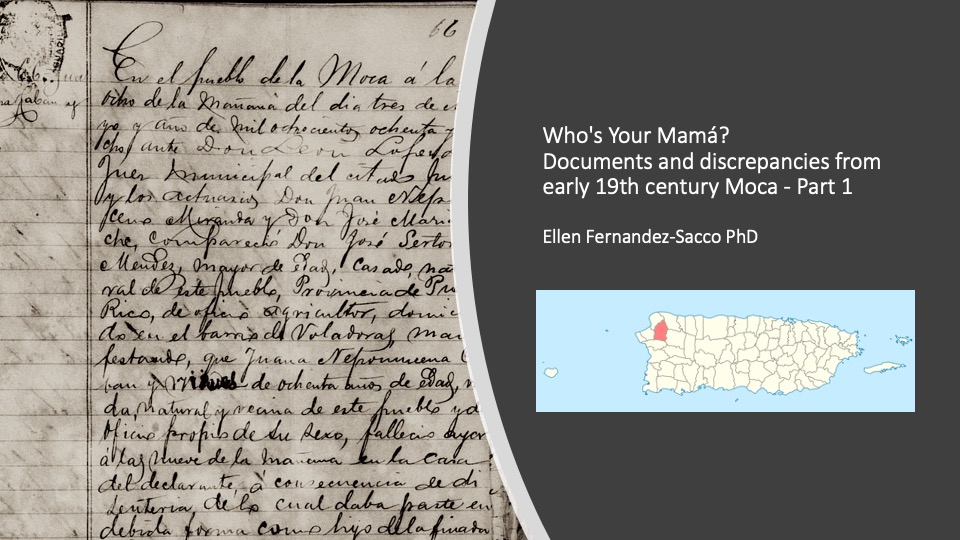
This blog post is the first of a 3 part case study that shows a process of resolving name discrepancies. The sections offer Part 1: An overview , Part 2: Dealing with data and then Part 3: Making sense of the bits — gleaning details and pulling it together.
Part One: An Overview
Today, searching for ancestor matches with DNA cousins involves a more intensive use of records that predate 1885. That’s before the 1910 census and the Civil Registration, which began in Puerto Rico in 1885. Various documents cover births, marriages and deaths, three major life events marked by ritual and documents.
Categories, gender, vital documents
First, think about the ways that gender roles and social expectations can shape the information in these documents. 19th-20th C PR society was stratified, meaning that privilege came with white male property holder status at the top. This wasn’t guaranteed. Status could shift over time, often in response to changes in law and downturns in the economy. And it wasn’t just men. Note that women could own and inherit land and run businesses, so they too may appear in more documents.
Life changed in significant ways in the hundred years between 1800-1900. With enough information we may learn why a family’s fortune rose and fell over time. Some recently freed were able to purchase land and property. Yet laws that limited the ability of people to purchase property increased later in the century. This wasn’t necessarily linked to illiteracy, for in Moca, POC had higher rates of literacy in a largely illiterate society.[2] When tracing formerly enslaved ancestors one needs to review many kinds of documents to see where they may be mentioned.
Ultimately, many different ancestries blended on the island. Still, there can be problems in tracing descent along maternal lines, particularly if one is just focusing on male heads of household. There were many female headed households among African or Afro-Indigenous descended families. Laws enforced the use of single surnames and descriptive terms of color to distinguish free and unfree people from those in power.
Names can change over time. Among the reasons people changed surnames was as a result of parents remarrying, or to recognize paternity by using their father’s surname as a maternal surname. Some simply used a maternal surname to have another identity. You maybe able to find out why and add that story to your family history.
Knowing Where to Go Next
To all of these reasons for potential variations in sources, add the gaps in record sets. A range of techniques is needed to solve these riddles of identity and complete a reasonably exhaustive search.
One helpful book for determining the range of extant records for parishes across the island is Rodriguez-Leon OP’s La Microdemografica Parroquial de Puerto Rico. [1] Access to these records can vary. Some are microfilmed and while some parishes have refused the filming of their records, there is an effort underway to digitize and centralize records through the Archivo Diocesano in San Juan, and the SPG (Sociedad Puertorriquena de Genealogia) has transcriptions and books available for members (and some transcriptions for non-members).
Four parishes did not film their archives in the late 1980- early 1990s project by the LDS, yet several related sets of parish and municipal were uploaded to the FamilySearch.org site. They’ve reorganized the search page. Scroll down. Note how the database now clusters related resources beneath the search panel. Look at surrounding municipalities as they may have relatives there as well.
Protestant records begin after the Spanish American War. As I’m going to discuss the early to late nineteenth centuries, parish records will be for the Catholic Church, supplemented by available notarial documents. Next, to consider an 1888 death record for Juana Nepomucena Caban who died age 80 in Moca.
[1] Mario A. Rodriguez-Leon OP’s Los Registros Parroquiales y La Microdemografica Parroquial de Puerto Rico. Centro de Estudios Avanzados, San Juan, PR 1986.
[2] Antonio Nieves Mendez, Historia de un pueblo: Moca 1772 al 2000. 2008, Lulu.com
Mario A. Rodriguez-Leon OP’s Los Registros Parroquiales y La Microdemografica Parroquial de Puerto RicoAntonio Nieves Mendez, Historia de un Pueblo: Moca 1772 al 2000.
Dr. Ellen Fernandez-Sacco’s introduction to Puerto Rican genealogy includes an overview of the challenges & opportunities researching ancestors enslaved and free.
Join us for this virtual program.
Y tu abuela, donde esta?: An Introduction to Puerto Rican Genealogy
Dr. Ellen Fernandez-Sacco’s introduction to Puerto Rican genealogy includes an overview of the challenges & opportunities researching ancestors enslaved and free, available resources and strategies for getting started. Bring your questions! Handout available.
Ellen Fernandez-Sacco works to connect people to their ancestors. One of her book projects highlights the connections between slavery, genealogy and family histories in nineteenth century Puerto Rico. She has published articles on American museums, genealogy, eugenics, and the history of mundillo— traditional Puerto Rican lace making. Past President of the California Genealogical Society, she received her doctorate in Art History from UCLA. Her most recent article is “Reconstructing the missing Registro Central de Esclavos for NW PR.” Hereditas (2021).
In this post, I’ll provide the context of a death record for Juana Nepomucena Caban as we start to unpack what appears in this 1888 Acta de Defuncion. Ultimately whatever information is collected, consider it together with any available documentation as you work your way to earlier generations.
Since one document leads to another, the civil registration can be tied to parish records, municipal documents, census, passports, etc. The information these contain, taken together can demonstrate some of the principles of the Genealogical Proof Standard, by examples in the next post. What details can a document provide to help understand an ancestor’s past?
We’ll start with the death certificate, an Acta de Defuncion created just three years after the Registro Civil begins. Will that document establish who are the parents of Juana Nepomuceno Caban of Moca, Puerto Rico?
Context: The Who & Where of Juana Nepomucena Caban’s Death
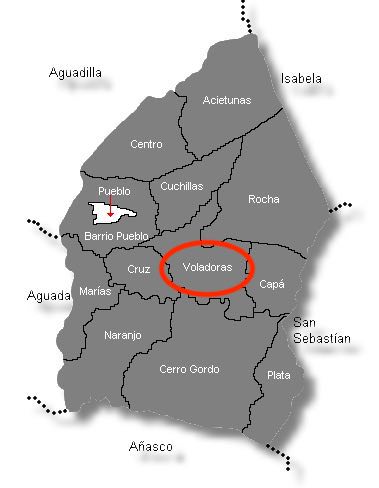
Barrios (Wards) of Moca, Puerto Rico Barrio Voladoras highlighted.
Early in the morning of 3 May 1888, Jose Sertoris Mendez Caban, a married farmer born in Moca, left Barrio Voladoras and went to the pueblo to report the death of his eighty year old mother, Juana Nepomucena Caban. At 8AM, before the municipal judge Leon Lopez Diaz, and Juan Nepomuceno Miranda and Jose Maria Euche, the judge’s two agents, or actuarios, Jose Sertoris Mendez gave the committee her cause of death, the names of his father and 13 siblings. Locals Avelino Miranda and Jose Cosme Lopez, ‘cigarrero y el segundo panadero’ (‘cigarette maker and the second, bread maker’) served as witnesses along with Jose Quinones, panadero, and Jose F Maldonado, comerciante (businessman).
This offers a glimpse of the local community in Barrio Pueblo at the time. Often, many of the people mentioned are related, with ties to land, local production or commerce, revealed with further research. In the late 18th-early 20th centuries, Barrio Voladoras was a rural area with farms and plantations that provided subsistence crops in addition to luxury crops such as coffee and sugar.
Juana Nepomucena Caban’s parents aren’t mentioned. The details in this document help outline her family, and leave significant questions about her parents. Even the inked over surname seems to suggest doubt. Why didn’t Jose Sertoris mention his grandparents?
This is information that can change the ancestors that connect, and provide previously unknown branches as many learn via DNA cousin matches. With Puerto Rico’s high degree of endogamy, documents can offer clues to chart the connection, and if available, oral history may help to confirm details. Regardless, missing documents can leave one grateful that an ancestor made it into the Registro Civil, which starts in 1885.
If a family had resources, there’s a higher likelihood of locating them in notarial documents (wills, rental arrangements, land sales, enslavement, etc) newspapers (Library of Congress) or dispensations (dispensas) at the Archivo Diocesano in San Juan. Some digitized series and transcriptions are available. These ancestors may be mentioned even if they were not the parties who filed for the documents with the local notary.
Microfilm Sources
When working with record sets and transcriptions, one wants to have access to original records, but the next best thing is microfilm. Currently, the largest collection of documents on microfilm is on FamilySearch.
There are some problems seeing original primary documents in Puerto Rico: many parish records aren’t readily accessible, trying to make appointments at the Archivo General de Puerto Rico or Special Collections at UPR or InterAmericana in a pandemic for starters., Next are the significant gaps for some early nineteenth century records.
There’s a heavy reliance on transcriptions because of restrictions on other record sets such as notarial records. Unlike other countries, notarial documents have no expiration date in Puerto Rico. As the original documents disappear, transcriptions then become primary sources. That digitized microfilm may be the only copy of records that survived fire, weather, insects and heat over the centuries. It’s still better than having no sources at all.
You’ll want to keep track of your sources so any conflicting information can be traced back, and know its source to avoid repeating an error in the future.
Basically, researching involves cross referencing the information in records, tracking children and tracing collateral lines. Broadening the family tree has the potential to yield some answers, especially when there are several lines with the same surname in an area. In this case, Caban is a surname in NW Puerto Rico that has clusters in Aguada, Moca, Aguadilla and Isabela, made up of different families.
Identity, Names, Surnames
Born in Moca, a municipality in northwest Puerto Rico sometime during the early 1800s, Juana Nepomucena Caban lived through the island’s social and economic shifts. Over the eight decades of her long life, the farms that produced for subsistence and some luxury crops for export, shifted to the rise of coffee and larger sugar plantations . We can glean several facts from her death record of 1888, which i’ll list in the next post.
In the pages of the Registro Civil for Moca, Juana Nepomucena Caban appears as Caban Nieves in her death certificate– but is her maternal surname correct?
Given that there are several Caban lines across the northwest that can differ in terms of ethnicity, endogamy and/or origin, confirm identity with as many sources as possible. As errors do appear in official documents, earlier records may confirm her maternal line. Closer relatives can provide more details than say, a neighbor sent to register a birth or death. Sometimes the relationship is not mentioned, but becomes apparent as you build your tree.
Secondary sources: sometimes it’s the only resource
In this document, the 1888 information can be compared with a transcribed 1859 baptismal record for her son, Gregorio Mendez Caban. In it, Gregorio’s maternal grandmother, (Juana Nepomucena’s mother), is simply identified as Juana Hernandez, wife of Juan Caban— not Juana Nieves.
In fact, thanks to transcriptions by a Sociedad Ancestro Mocanos member Rosalma Mendez, information on another daughter, Zenaida, also lists a variation in an early baptism record. Since this is a transcription of an earlier document, it’s a reason to keep searching and find additional records to confirm her parents identities. More on this in the next post.
Naming patterns: clues in variations
What about Juana Nepomucena Caban’s given name? She can appear in records as Juana, Juana Nepomucena, or simply as Nepomucena, the female version of the name for Saint Juan Nepomuceno. Tracking name variations is helpful for searching. These can include middle names or even apodos, the nicknames used on a daily basis. At times a nickname appears in a record or oral history. First names can repeat in family naming patterns and offer another clue to follow.
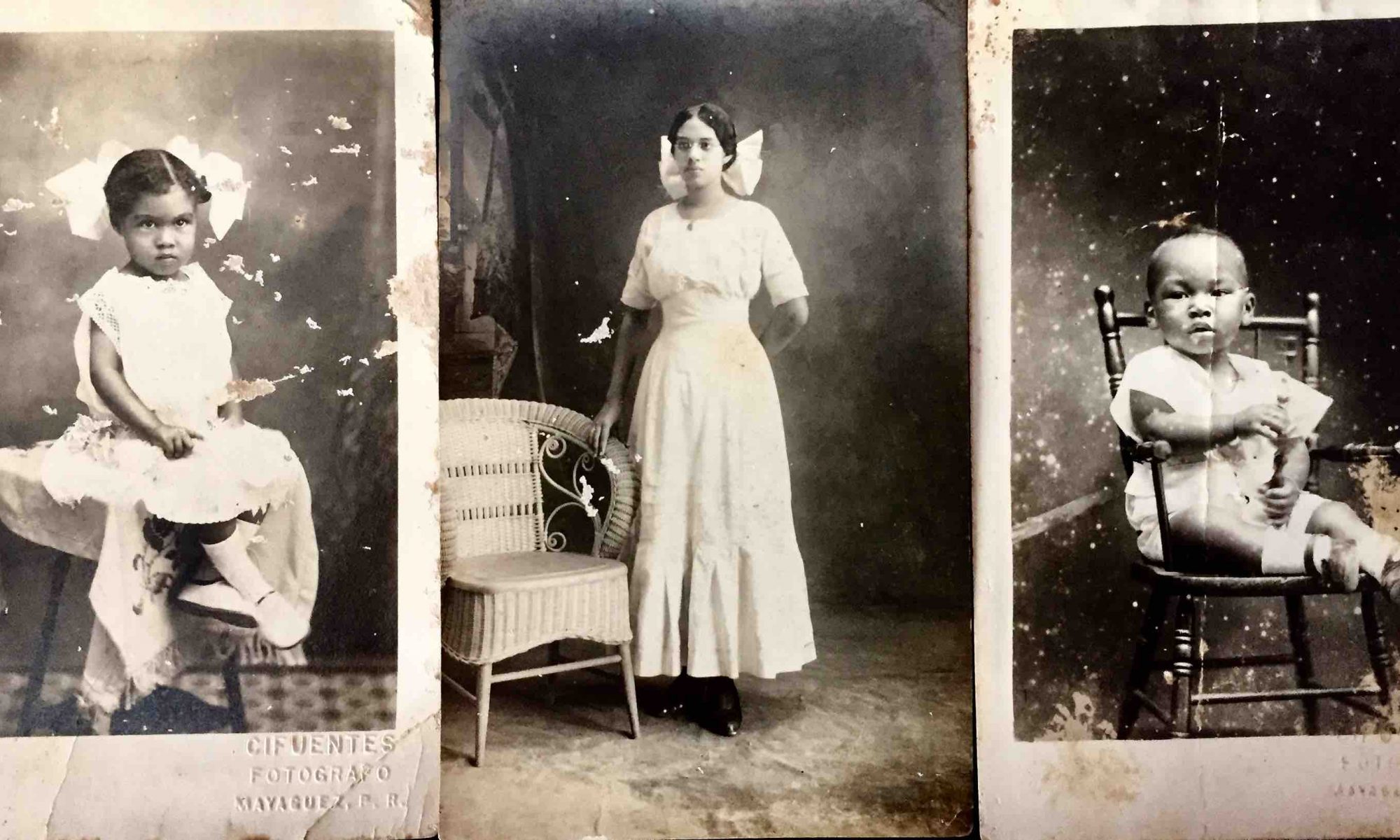
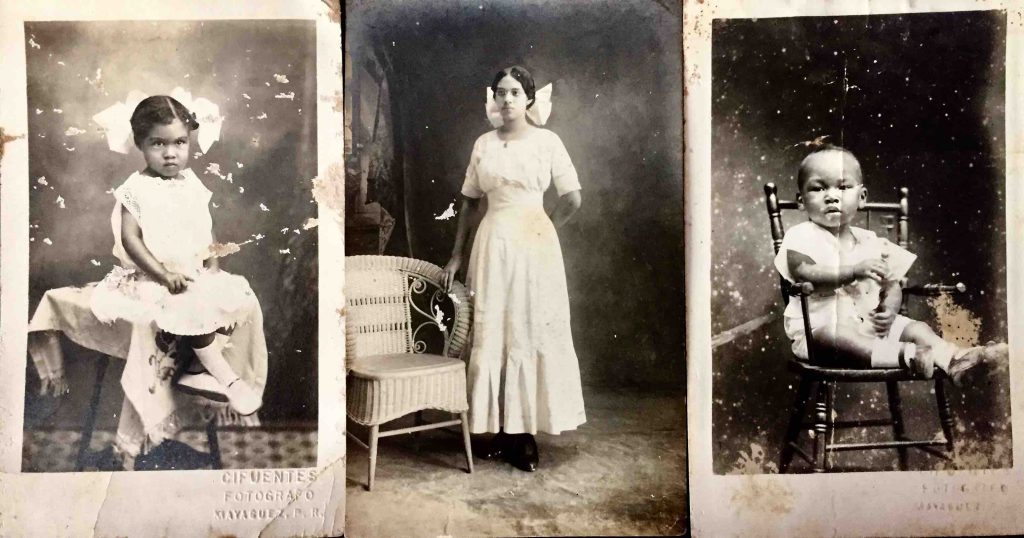
Three photo postcards from Mayaguez, ca 1910. Postcard collection, EFS.
It seems almost weekly, we see articles describing tone deaf and racist approaches to the teaching of slavery, on which the foundation of this country rests, and maintains today. Part of the problems rests on the disconnect between this history and how and what we learn, together with where and who delivers a particular narrative about the past. The SouthernPoverty Law Center, in response to the recent spate of incidences in schools across the country, issued a report with seven common problems in teaching about slavery, which I rewrote here to apply to genealogy.
1. We understand that slavery is not a universal experience for AfroIndigenous peoples, but it is the fact of how this nation was founded. We seek to research, learn and understand the roles and experiences of families and communities within these systems.
2. We acknowledge that flaws are embedded in particular understandings of American history, and that by understanding their role in impacting family history, we can also work towards change.
3. Enslavement is an American institution that crosses time and place. It existed in all colonies and states at the time of the signing of Declaration of Independence, and its principles continue to be bound with the economic fate of the nation today.
4. We speak to the ideology of white supremacy, and point to its outline and role of eugenics within the formation of genealogical practice. We also consider the perpetuation of slavery within forms of structural racism today, that connects past and present.
5. We deal with traumatic experiences as part of our history; the focus within our approach is on resilience and survival.
6. Genealogy and family history are contextual practices- we seek to incorporate the scope of POC experience by not divorcing it from the cultural currents and practices of the time.
7. Our focus on the lives of AfroIndigenous ancestors decenters white experience, and instead references a framework of relevant political and economic impacts in the time leading up to and beyond the Civil War. African American institutions provided structure and opportunity, thereby affording a way out of no way.
These two quotes, from a speech made by James Baldwin in 1980 still resonate today when thinking about family histories, genealogy and their use in interpreting the larger context of living and understanding the past:
“I want to suggest that history is not the past. It is the present. We carry our history with us. We are our history.”
“You got to find out the reality which surrounds you. You got to be able to describe it. You got to be able to describe your mother and your father and your uncles and your junkie cousin. If you aren’t able to describe it, you will not be able to survive it.” “Black English: A Dishonest Argument.” Randall Kenan, ed. James Baldwin, The Cross of Redemption, Uncollected Writings. 2010.