November 2025: Presentations & Podcasts

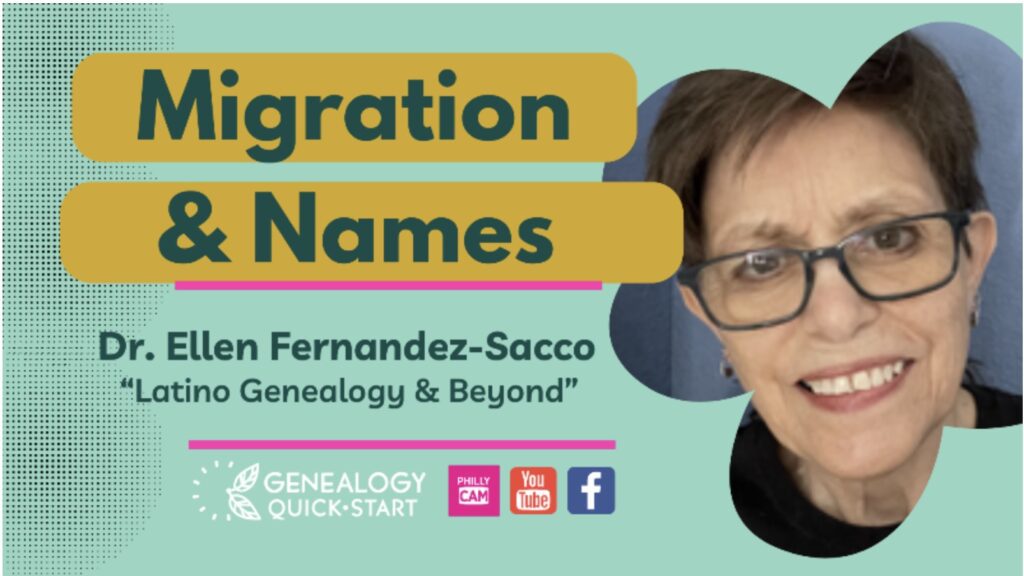
Migration & Names, Genealogy Quick Start, November 2025

This was a busy month! On Tuesday evening, I was a special guest on Shamele Jordon’s Genealogy Quick Start on the Migration and Names episode, talking about my third great grandfather in The Many Names of Telesforo Carrillo, based on a previous blog post. She is an amazing host, and I love her energy. Michael John Neill did the first part of the show, “Benjamin Butler Serves Research Suggestions” making suggestions for locating and verifying a very mobile ancestor who lived in several states over the course of his life.

While I spoke for just a half hour, i’m amazed at how a very long time researching ultimately distilled a story out of documents finally brought together. Thanks to the help of cousins, I pulled together documents to understand more about the struggles that each generation faced. Self identification and self determination weave through the lives of my ancestors. As a child in the South Bronx, I did get to meet Telesforo’s daughter Catalina, my great grandmother, who lived to be 104 years old. I ended with my grandfather’s 1925 passport, a folded page with the only photo of his first wife, Carolina Dorrios Picon and their three children, Bobby, Gloria and Sylvia Fernandez, in a photograph that is now a century old.

There are 213 episodes of Genealogy Quick Start, full of resources and recommendations for your browsing pleasure!
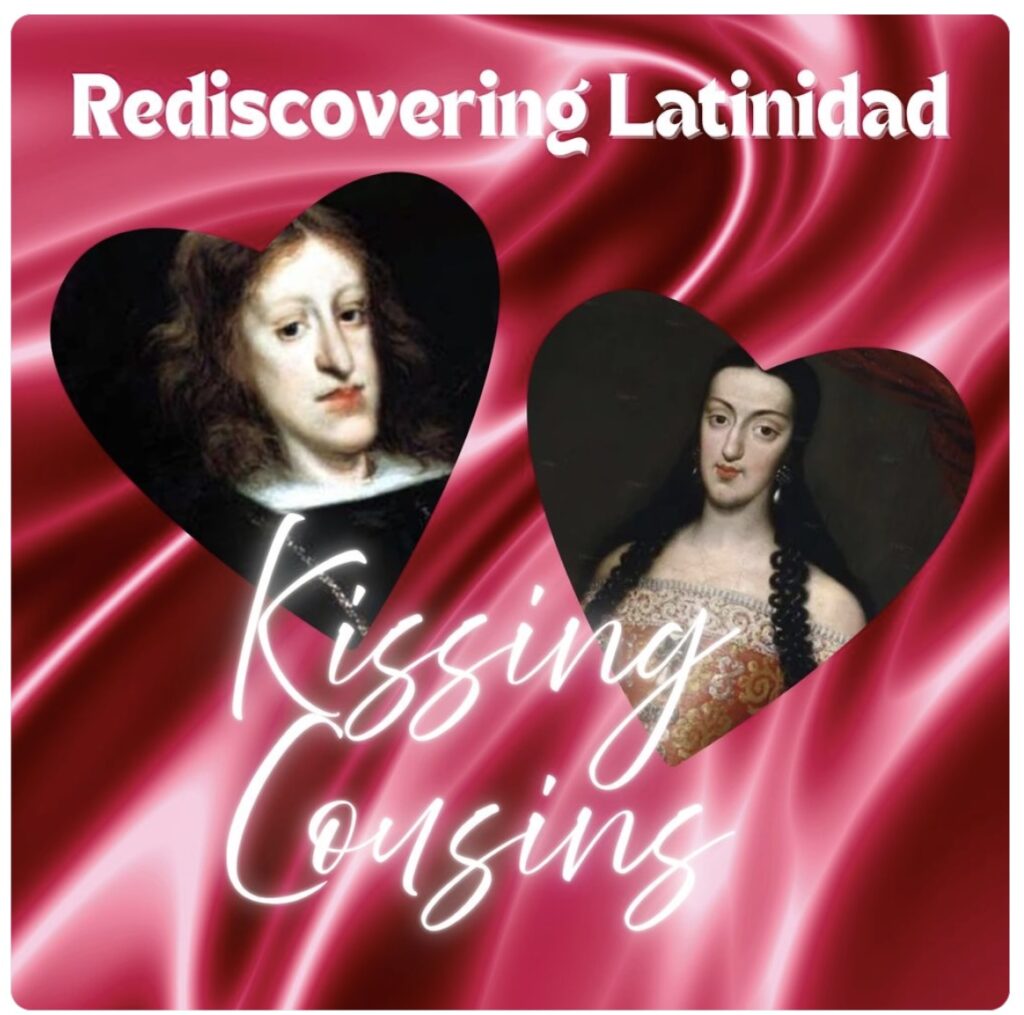
Rediscovering Latinidad, Season 7 Ep.8

Rediscovering Latinidad released their Kissing Cousin episode– Season 7 Ep. 8 – Cuando los primos se exprimen: La endogamia y el matrimonio entre primos, and I enjoyed talking with hosts Eduardo Rueda and Jellisa. Check it out as we go full cringe with endogamy and cousin marriage! This premier podcast about Latino genealogy, culture, heritage and rich layers of intersectionality also has a Patreon. With seven seasons of podcasts, Rediscovering Latinidad is a great resource for learning more about family history, with links for additional information on each episode page.
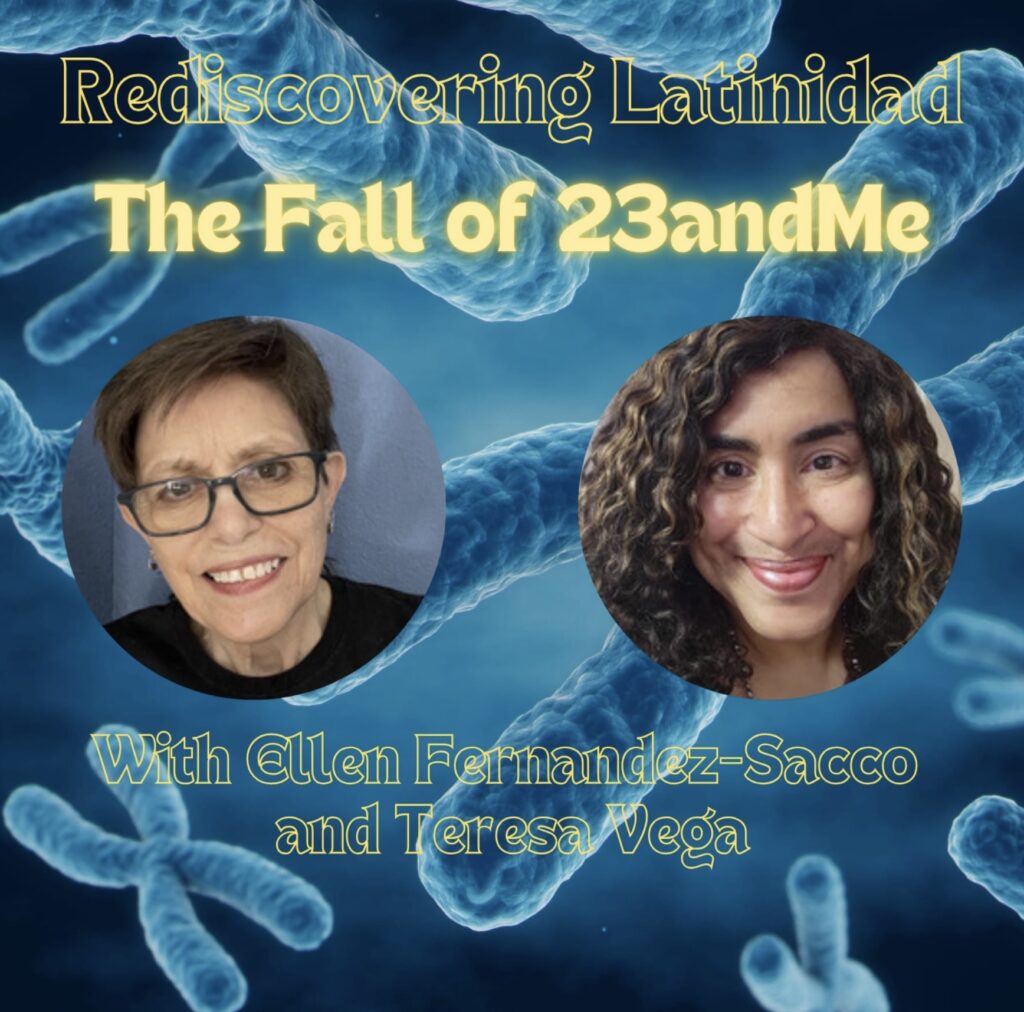
Rediscovering Latinidad Season 7 Episode 10

Rediscovering Latinidad also rereleased their most popular episode from Season 7 Episode 10, La Caida de 23andMe/ The Fall of 23andMe, with guests my cousin Teresa Vega and I. Teresa’s extensive knowledge of DNA and complex family histories adds to the discussion. Check out her blog, Radiant Roots Boricua Branches for fascinating research on Revolutionary War ancestors, ancestors from Madagascar, and deep dives into family history.

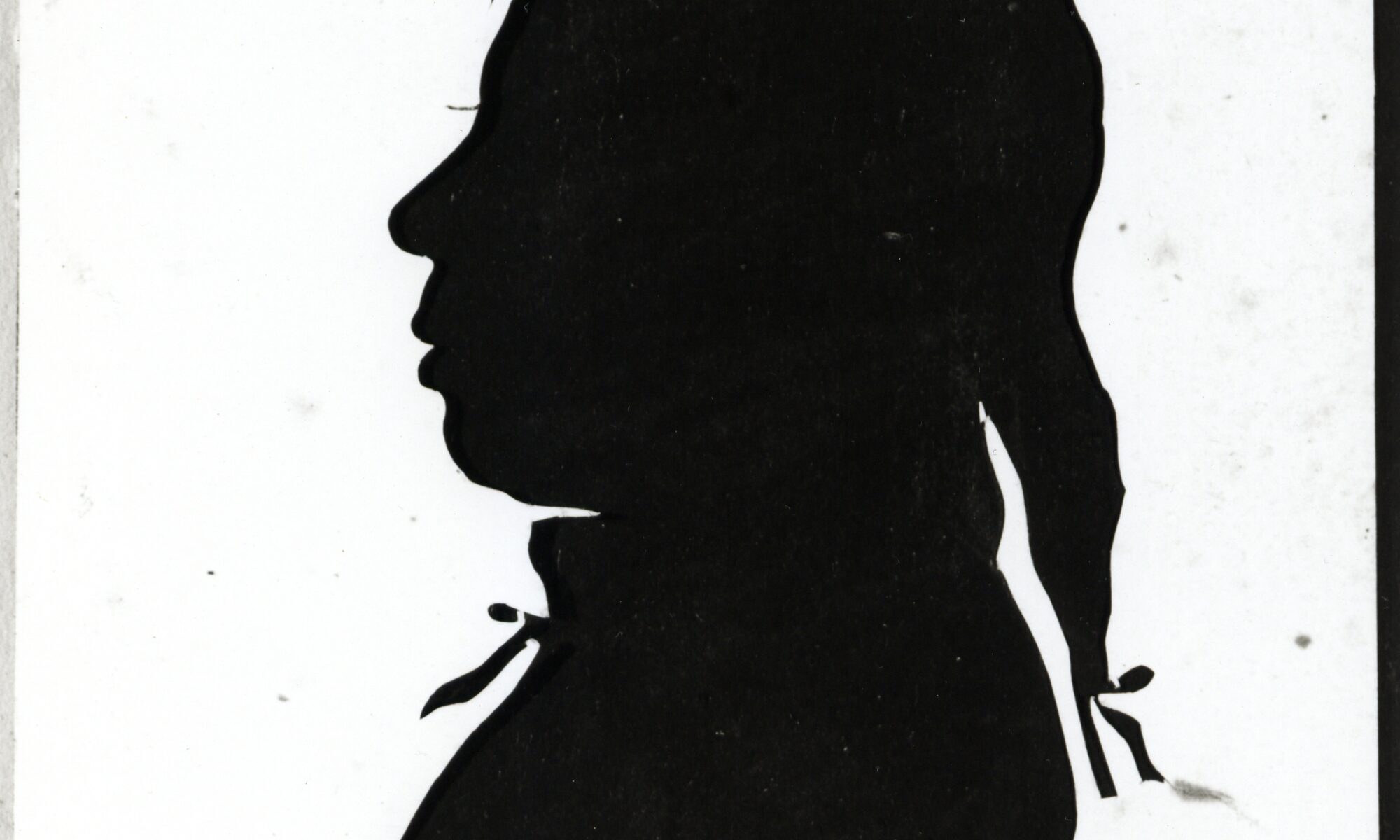
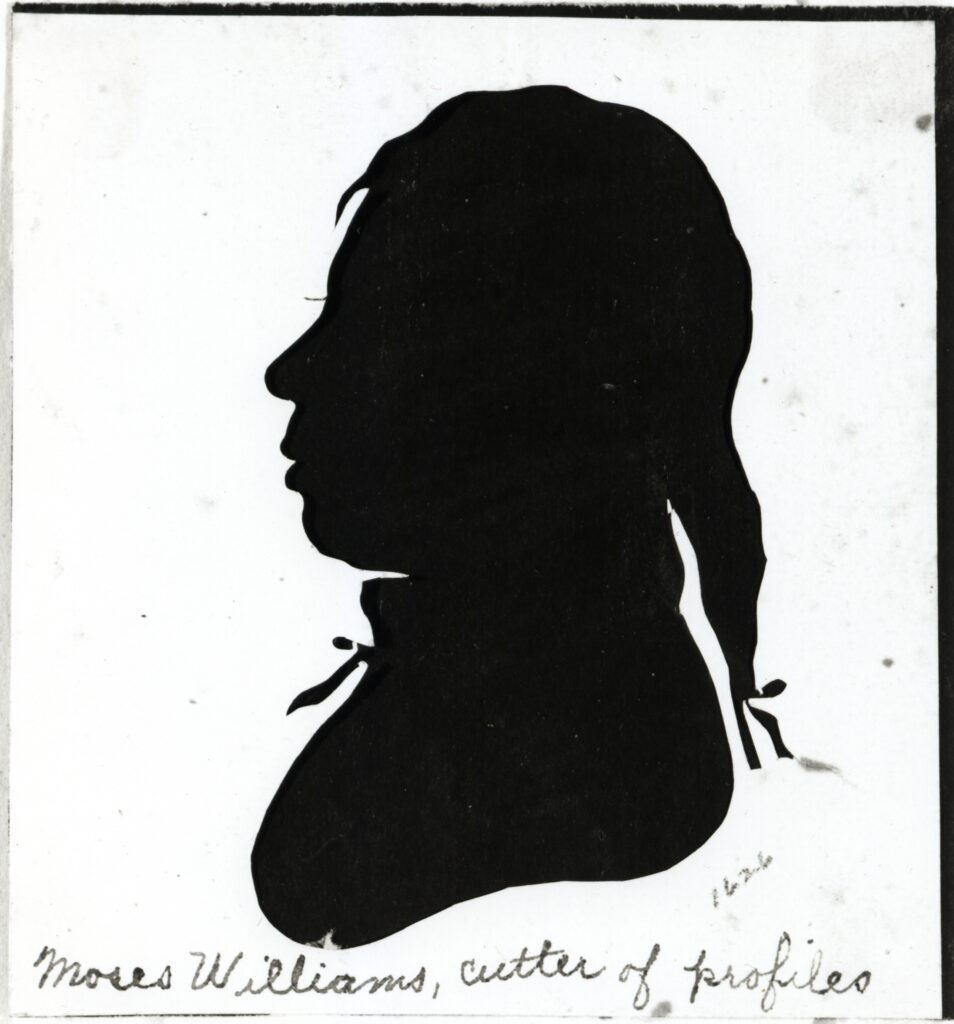
silhouette of Moses Williams, about 1802
Moses Williams, cutter of profiles

On November 19, I participated in the Library Company of Philadelphia’s virtual symposium Finding Moses Williams, along with four amazing scholars, who shared new insights on his art, life and family. He left a considerable body of work, and perhaps, descendants. So much to learn from these talks!

Here’s a list of the presentations:

Carol Soltis, Finding Moses in the Peale-Sellers family album.

Nancy Proctor, Presenting Moses at The Peale Baltimore.

Ellen Fernandez-Sacco, Not Yet Completely Free, The Context of Gradual Emancipation & the Family of Moses Williams 1776-1830.

Dean Krimmel, Locating Moses Williams in Philadelphia, new information about Moses Williams’s life and death based on a re-examination of Philadelphia’s primary sources.

Lauren Muny, Moses Williams, A Technical View.

View the Finding Moses Williams symposium on YouTube : https://www.youtube.com/watch?v=CV00DmBxTb8

Wishing you a very happy December! Seneko kakona!
Finding Moses Williams: a virtual program, 19 Nov. 2025

silhouette of Moses Williams, about 1802

Thrilled to announce i’ll be presenting along with four other speakers at an upcoming virtual program. The Library Company of Philadelphia’s Program in African American History and the Center for American Art at the Philadelphia Art Museum are sponsoring the event.

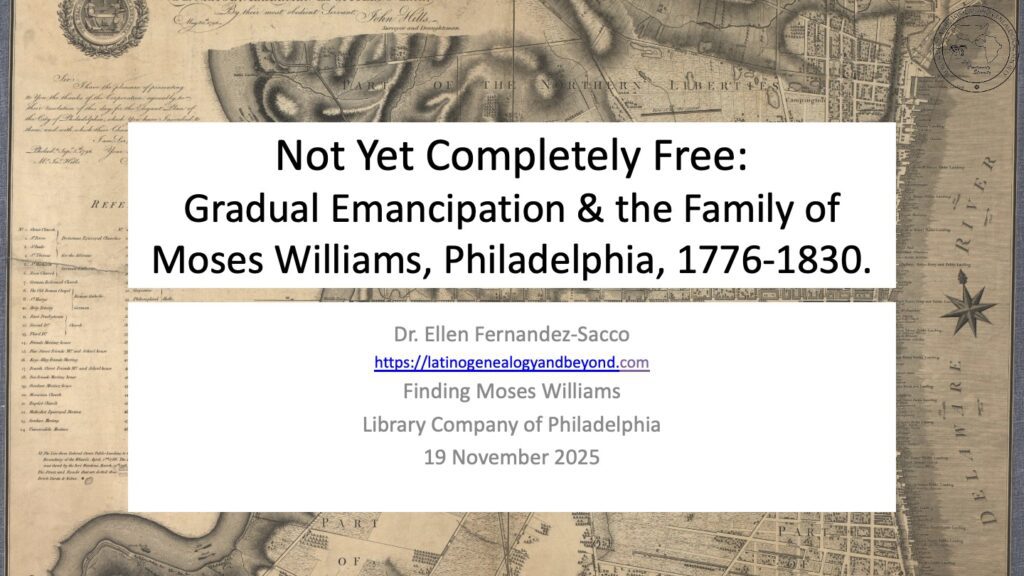
My twenty minute talk, “Not Yet Completely Free: Gradual Emancipation and the Family of Moses Williams, Philadelphia, 1776-1830.” presents the results of an archival journey. While I searched for information on Moses Williams, I instead found indentures in the Pennsylvania Abolition Society Papers for his family members that let me reconstruct his family tree. These records show how a Free Black family navigated a difficult economy in the decades before the 1838 census.

This talk draws on my article which appeared in volume 43 of the AAHGS Journal. The Sons and Daughters of the US Middle Passage awarded me the Phillis Wheatley Literary Award this past June for the article.

title slide, Not Yet Completely Free
title slide, Not Yet Completely Free,

Finding Moses Williams: the program

The other presenters are Carol Soltis, Nancy Proctor, Dean Krimmel, & Lauren Mulvey with an introduction by Sarah J. Weatherwax, Senior Curator, Library Company. Appreciate the knowledge shared & discussed over the preceding months with artists and scholars whose work focuses on Moses Williams. There is much to learn about Williams life, art and family.

Please register at the link below the program description:

profile of Moses Williams ca 1802

Finding Moses Williams

Free Virtual Program

November 19th , 2025 at 1 PM ET

This program of illustrated talks by five speakers focuses on the identification of the exceptional hollow-cut paper profiles created by Moses Williams (1776-1830) at Peale’s Philadelphia Museum and on presenting new historically accurate information about Williams’s life and family. Moses’s parents were manumitted by Peale in 1786 and Moses, who was born enslaved, was then indentured to Peale by his parents until age twenty-eight

Raised within the Peale family, Moses was literate and trained in skills for creating and installing the Museum’s displays of art and natural science. After the installation of a physiognotrace device for creating hollow-cut paper profiles in 1802, Moses was freed and given the concession to operate this new attraction. The popularity of this inexpensive form of portraiture and the highly accurate and elegant profiles Moses cut, made him financially independent.

Recent research into Moses’s life provides us with a clearer understanding of his artistry and other activities, as well as his death date and the identity of his descendants. And, the story of Williams’s birth family illuminates how the practice of indenture used by Free Black families, like the Williams family, was a strategy for seeking financial stability.

A small selection of Moses Williams’s profiles will be on display at the Library Company during November and December and in the Peale Gallery at the Philadelphia Museum of Art.

REGISTER HERE

This program is sponsored by the Library Company of Philadelphia’s Program in African American History and the Center for American Art at the Philadelphia Museum of Art.

Celebrating My Phyllis Wheatley Award Recognition

Silhouette of Moses Williams, Cutter of Profiles, 1802

Thrilled to learn that I was awarded a Phyllis Wheatley Award for my article, “Not Yet Completely Free: Gradual Emancipation, and Moses Williams’ Family, Philadelphia 1776-1833.” from the Sons and Daughters of the US Middle Passage (SDUSMP)! The article is in the AAHGS Journal v.43 Winter issue.

The Phyllis Wheatley Award Ceremony is coming up on Friday, June 6, 2025, at 6:00 PM, as part of the SDUSMP’s 9th Annual Genealogy and Community Learning Conference. This year’s conference theme is: From Bondage to Legacy: Interactive Paths to Reclaiming Our Heritage in the Age of Erasure.

Silhouette of Moses Williams, Cutter of Profiles, 1802

Appreciate those people who have read various drafts, made suggestions or discussed issues with me; thanks to Guy Weston and the AAHGS Journal, for accepting the article for the journal, and to LaJoy Mosby, who invited me to be part of discussions on it. To Dean Krimmel, a deep appreciation of having the opportunity to talk about Williams; also to Nancy Proctor of The Peale Baltimore for encouraging my research on him and including me among a group of scholars and artists who continue to research him.

Deep thanks to Bernice Bennett, for having me on her new podcast, Ancestor’s Footprints. She gave me an opportunity to share what I learned about the Williams family and how they dealt with the terms of gradual emancipation in Philadelphia. Looking forward to Faye Anderson’s project of having a memorial marker installed in Philadelphia so more people can learn about Moses Williams. May his legacy and that of his family continue despite any attempt to erase or obscure this history.

May the ancestors rest in power.

Moses Williams: The First Black Museum Professional

Silhouette of Moses Williams, Cutter of Profiles, 1802
Silhouette of Moses Williams, Cutter of Profiles, 1802. Library Company of Philadelphia

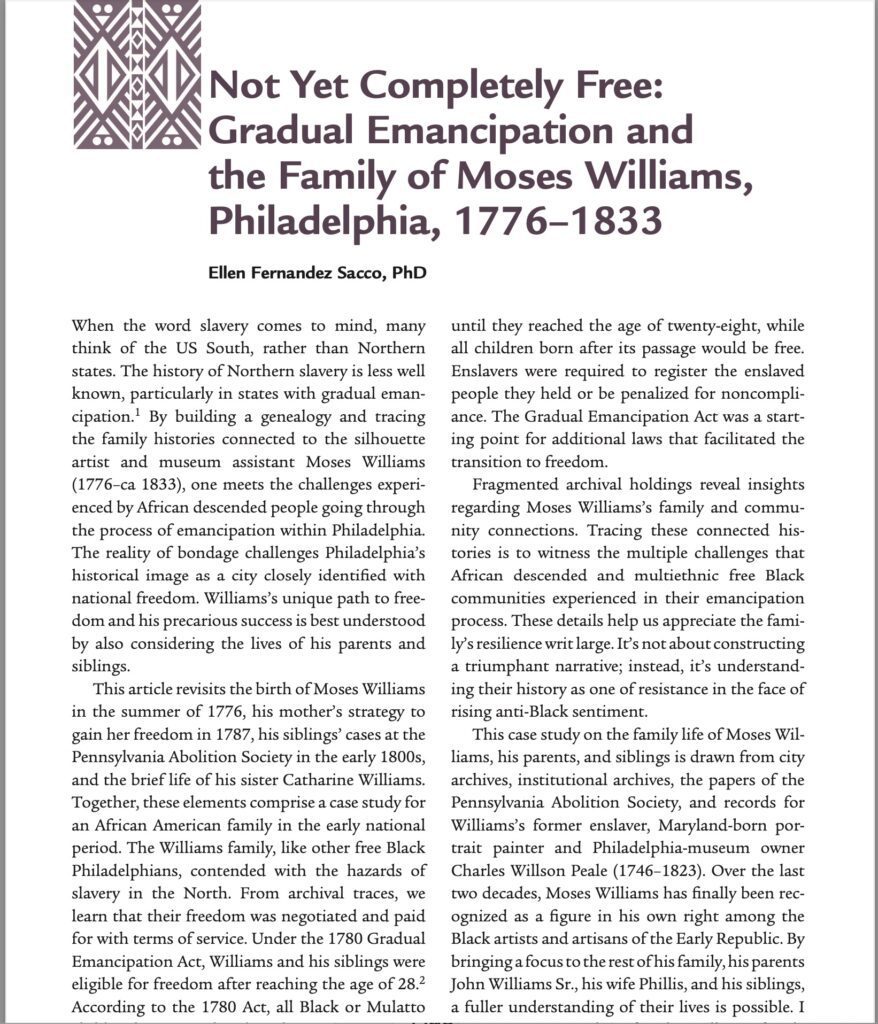
So happy to share that “Not Yet Completely Free: Gradual Emancipation and the Family of Moses Williams, Philadelphia 1776-1833. ” is in the latest issue of the AAHGS Journal!

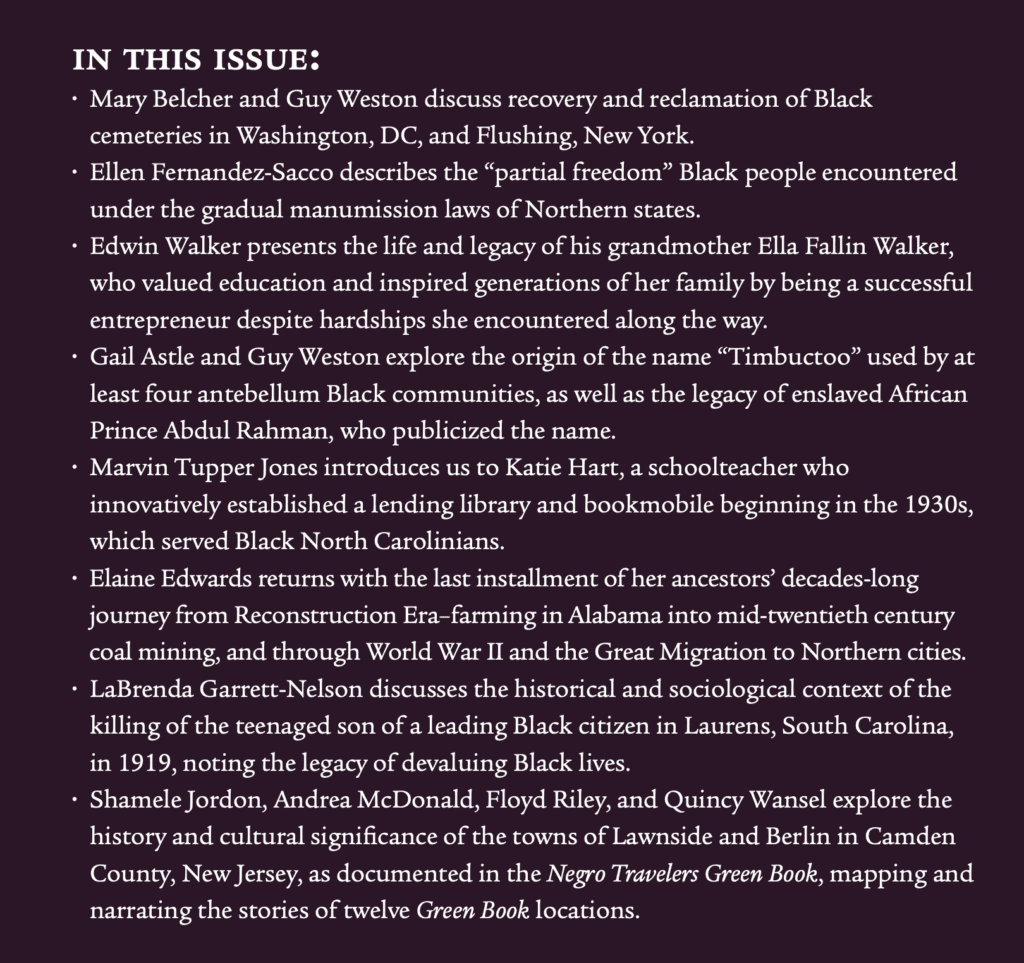
Volume 43 Winter Edition of the AAHGS Journal is available via Amazon. Editor Guy Oreido Weston brought together articles that span several states. The issue delves into family and local histories, the recovery and reclamation of Black cemeteries in Washington DC and New York.

Not Yet Completely Free: Gradual Emancipation and the Family of Moses Williams, Philadelphia 1776-1833.

Moses Williams is a paradigmatic figure for the 250th Anniversary of the founding of our country. Born into slavery in 1776, and eventually freed by 1803 under the terms of the 1780 Gradual Emancipation Act, Williams was the first Black museum professional. For a time, he owned property and a house at 10 Sterling Alley; he had a wife and at least four children. Raised in the museum, in proximity to the Peale children, Williams learned how to read, how to prepare birds and other animals for displays. Eventually he cut silhouettes there using a patented machine. In 1810, he considered his role important enough to tell the census enumerator that he ‘attended at the Museum’.

Now in 2025, an amazing group of historians, curators, writers and artists from different institutions & independent professionals are focusing on Williams’ life and craft. This is a sea change from the shock I experienced listening to an exasperated curator ask why look at him? in the midst of the Peale exhibition touring nationally some two decades ago. I published my first article in Museum Anthropology detailing what I learned about Williams, who also figured in my dissertation. This built on then-current Peale scholarship on the audience for Peale’s Museum. Black history did not figure into the history of museums, even though to function, some institutions were dependent on the labor of enslaved and indentured persons. Similar to Monticello, the Peale project suffered from a segregated history that has changed since the late 1990s.

Since then, Williams has been recognized as an artist and artisan in his own right, part of a growing community through exhibitions organized by Gwendolyn DuBois Shaw and other scholars. There is also an initiative by Faye Anderson, Director of All That Philly Jazz; she also serves on the Advisory Council on Historic Preservation, and plans to have him remembered with a historical marker where his former home stood, to be featured in future walking tours of the city.

Thanks to Nancy Proctor’s leadership at The Peale Baltimore’s Community Museum, much is done to anchor Williams’ memory into the 21st century– through the Accomplished Arts Apprenticeship Program and the creation of a Moses Williams exhibit at the museum. All of these projects do not just focus in on Williams, but intersects with community, provide spaces for connecting to the fabric of historic Philadelphia and present day Baltimore.

Williams is a historical figure I can relate to. He knew a lot about many things, was literate and skilled with his hands. When I went to museums I found myself connecting to the people who worked there cleaning, protecting and maintaining the collections, and so I see him as a kindred spirit, an ancestor who deserves to be taken seriously. To see the constructed nature of the display, its arrangement, the acquisitions taken as booty in wartime, silenced behind display labels shows the larger threads that colonization wove to establish particular kinds of truth. There was a silencing or veiling of the destruction of Native settlements and the genocide that accompanied these early campaigns, also tied to an economy built on the backs of enslaved people. Despite these challenges, Williams’ presence is there, part of a larger story of this nation.

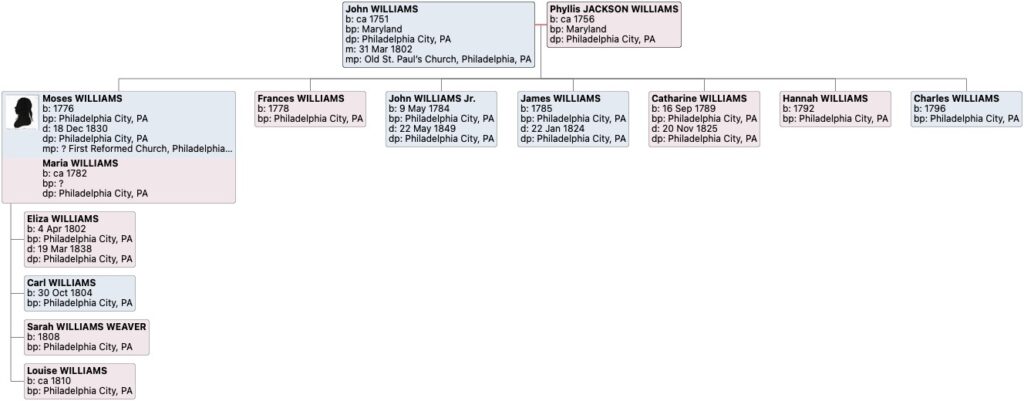
Beyond the display were questions of family. Even with what was reconstructed and recently discovered, there remain questions and the hope of finding more fragments to pull together. I’m part of a group that shares these new finds. Public historian Dean Krimmel working with The Peale found a probate file showing that he died 18 December 1830; of three daughters, two, Louise and Sarah are named, his son Carl became Charles. Now we know he had four children with Maria– whose surname remains unknown. The likelihood of finding descendants today increases with these additional names.

Descendants of John & Phillis Williams- The Williams Family Tree

But back to Williams and his family. Their experiences resonate, as they lived under the threat of kidnapping and forced deportation, the result of the constitutional amendment passed in 1793– the Fugitive Slave Act. They did everything to insure their family’s survival, even if that meant separation by indenture. My research uses details from the Pennsylvania Abolition Society Papers, church records, the Peale Papers, newspaper accounts, census records and other items to reconstruct two generations of the Williams family. My hope is that this reconstruction makes it possible for descendants to connect.

Hope, resilience and faith in a better future drove their choices. To face the future despite the challenges is what defines the Williams’ family history.

May the ancestors rest in power.