November 2025: Presentations & Podcasts

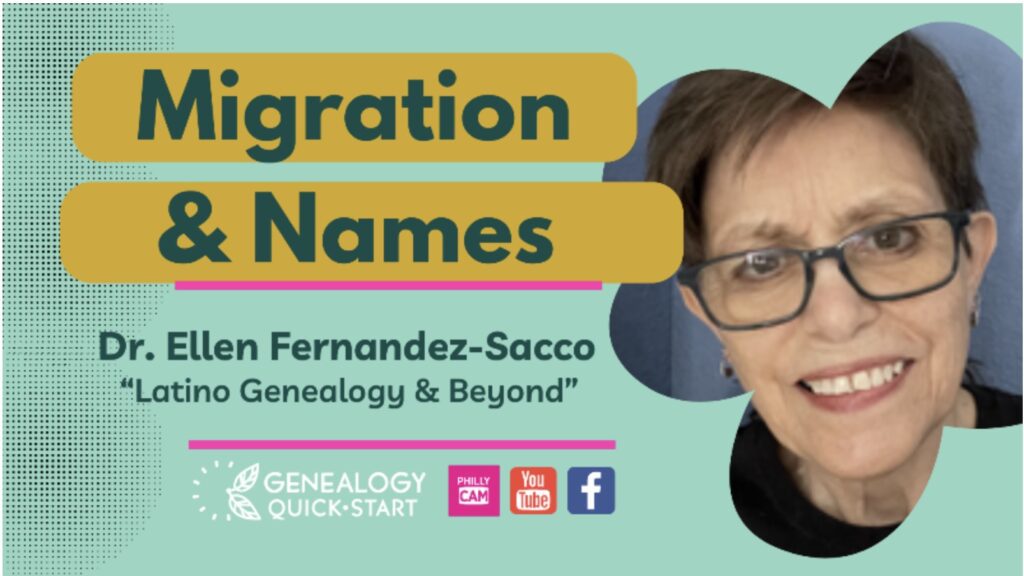
Migration & Names, Genealogy Quick Start, November 2025

This was a busy month! On Tuesday evening, I was a special guest on Shamele Jordon’s Genealogy Quick Start on the Migration and Names episode, talking about my third great grandfather in The Many Names of Telesforo Carrillo, based on a previous blog post. She is an amazing host, and I love her energy. Michael John Neill did the first part of the show, “Benjamin Butler Serves Research Suggestions” making suggestions for locating and verifying a very mobile ancestor who lived in several states over the course of his life.

While I spoke for just a half hour, i’m amazed at how a very long time researching ultimately distilled a story out of documents finally brought together. Thanks to the help of cousins, I pulled together documents to understand more about the struggles that each generation faced. Self identification and self determination weave through the lives of my ancestors. As a child in the South Bronx, I did get to meet Telesforo’s daughter Catalina, my great grandmother, who lived to be 104 years old. I ended with my grandfather’s 1925 passport, a folded page with the only photo of his first wife, Carolina Dorrios Picon and their three children, Bobby, Gloria and Sylvia Fernandez, in a photograph that is now a century old.

There are 213 episodes of Genealogy Quick Start, full of resources and recommendations for your browsing pleasure!
Rediscovering Latinidad, Season 7 Ep.8

Rediscovering Latinidad released their Kissing Cousin episode– Season 7 Ep. 8 – Cuando los primos se exprimen: La endogamia y el matrimonio entre primos, and I enjoyed talking with hosts Eduardo Rueda and Jellisa. Check it out as we go full cringe with endogamy and cousin marriage! This premier podcast about Latino genealogy, culture, heritage and rich layers of intersectionality also has a Patreon. With seven seasons of podcasts, Rediscovering Latinidad is a great resource for learning more about family history, with links for additional information on each episode page.
Rediscovering Latinidad Season 7 Episode 10

Rediscovering Latinidad also rereleased their most popular episode from Season 7 Episode 10, La Caida de 23andMe/ The Fall of 23andMe, with guests my cousin Teresa Vega and I. Teresa’s extensive knowledge of DNA and complex family histories adds to the discussion. Check out her blog, Radiant Roots Boricua Branches for fascinating research on Revolutionary War ancestors, ancestors from Madagascar, and deep dives into family history.

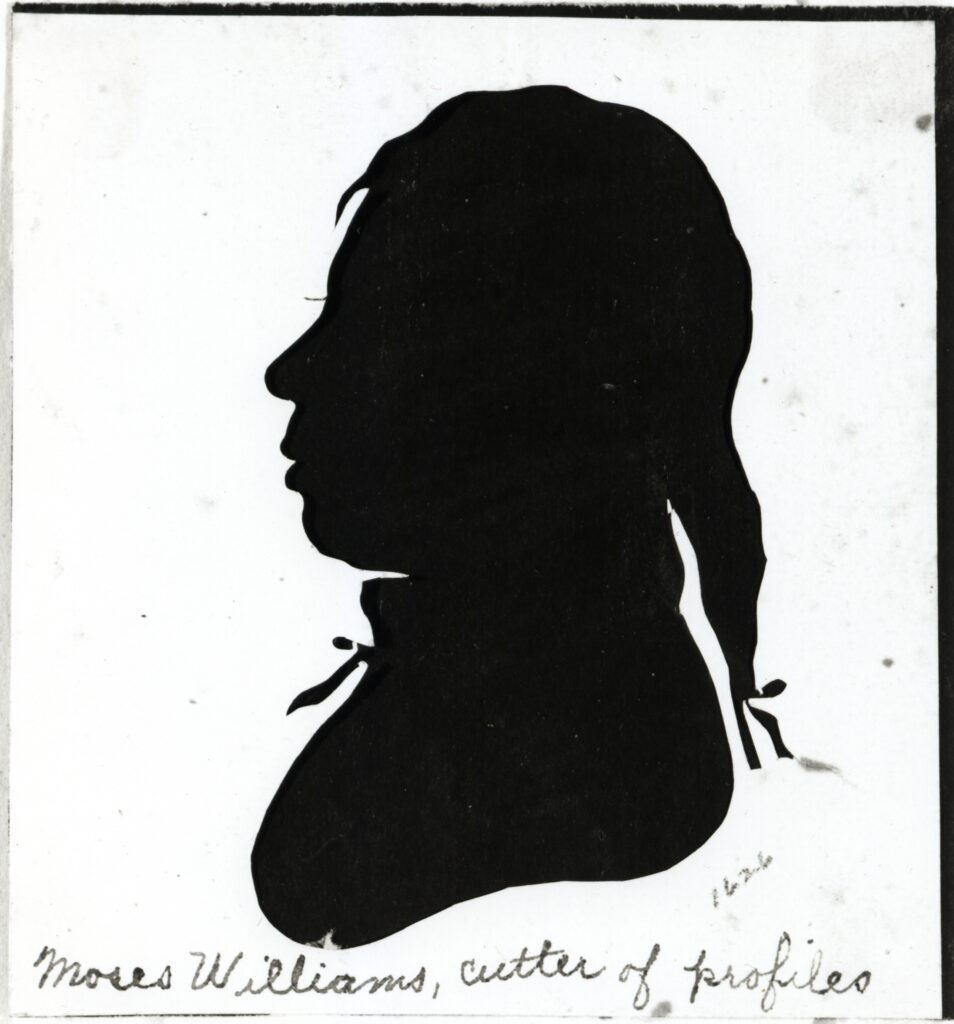
silhouette of Moses Williams, about 1802
Moses Williams, cutter of profiles

On November 19, I participated in the Library Company of Philadelphia’s virtual symposium Finding Moses Williams, along with four amazing scholars, who shared new insights on his art, life and family. He left a considerable body of work, and perhaps, descendants. So much to learn from these talks!

Here’s a list of the presentations:

Carol Soltis, Finding Moses in the Peale-Sellers family album.

Nancy Proctor, Presenting Moses at The Peale Baltimore.

Ellen Fernandez-Sacco, Not Yet Completely Free, The Context of Gradual Emancipation & the Family of Moses Williams 1776-1830.

Dean Krimmel, Locating Moses Williams in Philadelphia, new information about Moses Williams’s life and death based on a re-examination of Philadelphia’s primary sources.

Lauren Muny, Moses Williams, A Technical View.

View the Finding Moses Williams symposium on YouTube : https://www.youtube.com/watch?v=ZLxsuixugCk

ps just replaced the link for the symposium, and they’re working now!

Wishing you a very happy December! Seneko kakona!
Not Yet Completely Free – An Evening with AAHGS Journal Writers: 12 Feb 2025

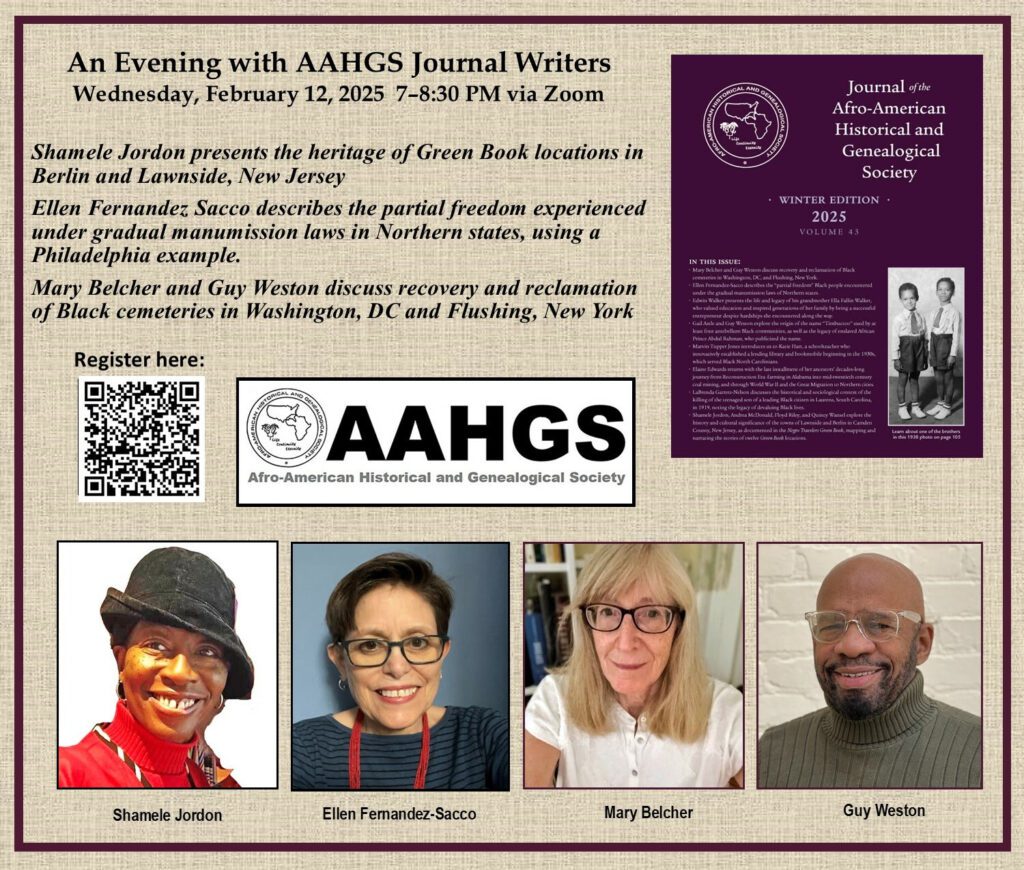
flyer An Evening with AAHGS Authors for 12 February 2025

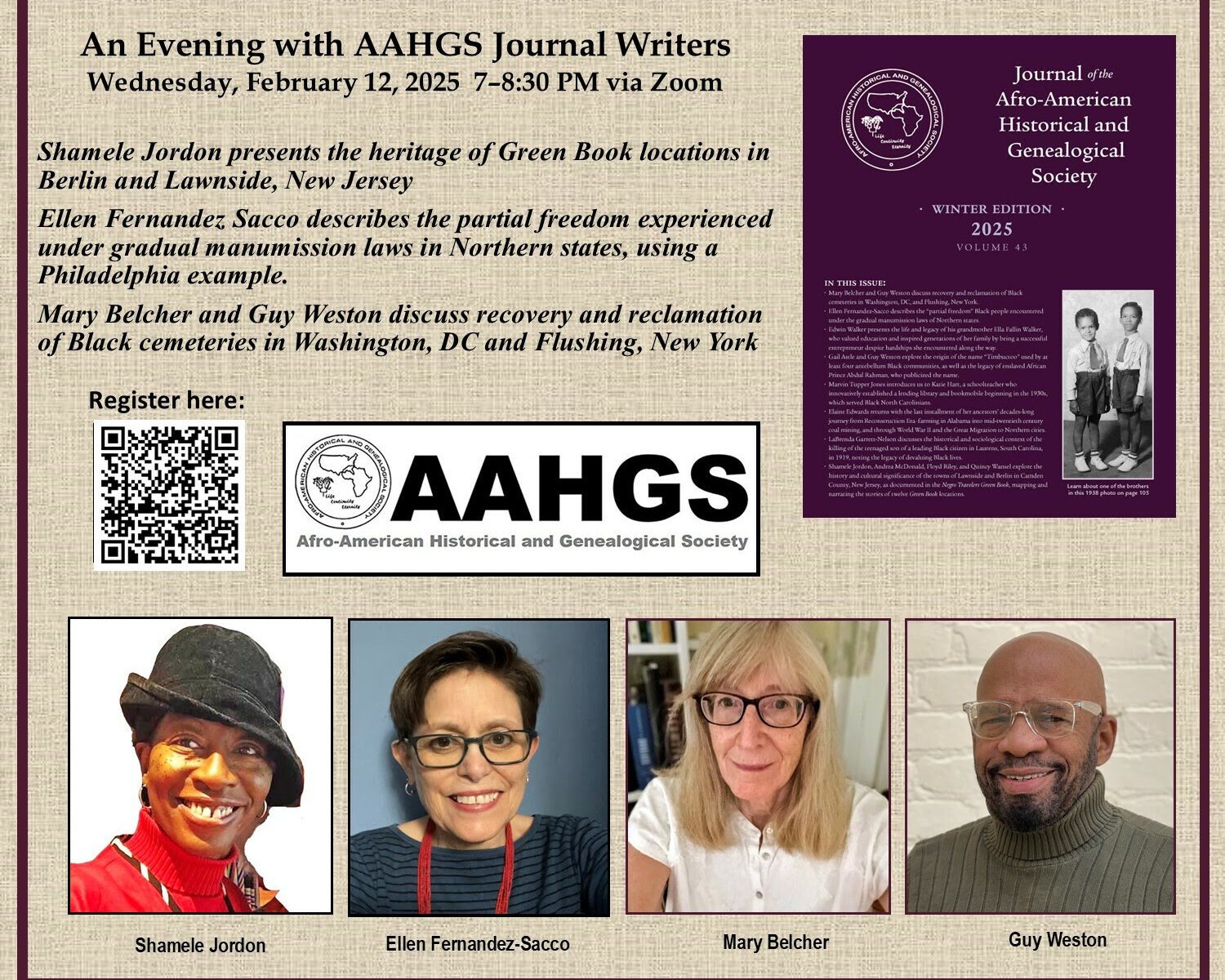
So happy to announce i’ll be talking about my recent publication in the Winter 2025 issue of the Afro-American Historical and Genealogical Society Journal, “Not Yet Completely Free: Gradual Emancipation and the Family of Moses Williams, 1776-1833.”

I’ll discuss the 1780 Gradual Emancipation Act in Philadelphia, part of the lesser known history of Northern slavery. By tracing the family histories connected to the silhouette artist and museum artisan and assistant Moses Williams (1776-ca 1833) one can catch sight of the challenges experienced by African descended and multiethnic Free People of Color in their emancipation process in this city. Williams was among the children of John and Phylis Williams, a couple held in bondage until 1786. He worked in the Philadelphia Museum of Charles Willson Peale from his childhood to adulthood and was manumitted about 1802.

Shamele Jordon will present on the heritage of Green Book locations in New Jersey, and Mary Belcher and Guy Weston will discuss recovery and reclamation of Black cemeteries in Washington DC and Flushing New York.

The event is for AAHGS members, so join today!

Restoring the Legacy of Moses Williams: A Case Study of Emancipation

AAHGS 45th National Conference banner

Thrilled to announce that my presentation proposal, “Not Yet Completely Free: Gradual Emancipation and the Family of Moses Williams, Philadelphia, 1776-1833.” was accepted for the 45th AAHGS National Conference this October!  Appreciate the opportunity to share, learn and contact other genealogists and family historians at this wonderful event, hosted by AAHGS President LaJoy Mosby. 

The conference theme is “Fighting Erasure: Staying Visible by Keeping African American Genealogy and History in Focus.” This centers on the “role of preserving and spotlighting African American history and genealogy in the broader narrative of American history.” 

Silhouette of Moses Williams, Cutter of Profiles, 1802
Silhouette of “Moses Williams, Cutter of Profiles, 1802″Library Company of Philadelphia.

Here’s my abstract for my presentation, “Not Yet Completely Free: Gradual Emancipation and the Family of Moses Williams, Philadelphia, 1776-1833.” :

When the word slavery comes to mind, many think of the US South, rather than the Northern states. Northern slavery’s history is less well known, particularly in states with gradual emancipation—Pennsylvania, New York, New Jersey, Connecticut. This presentation focuses on the family histories tied to the silhouette artist and museum artisan Moses Williams (1776-ca 1833), to glimpse African descended, Free People of Color and the challenges faced in their process of emancipation. The reality of bondage challenges the image of Philadelphia, a city so closely identified with national freedom. Important clues for Moses Williams and his family are contained in archives that includes the Pennsylvania Abolition Society, and records for his former enslaver, the Maryland-born portrait painter and Philadelphia-museum owner Charles Willson Peale (1746-1823). Peale held Williams’ parents between 1776-1786, and freed Williams in 1803. Most archival material on the Williams family is excavated from the Papers of the Peale Family, newspapers, deeds & census records. While the origins of Williams parents remain a question, records suggest the situations that Free Black Philadelphians contended with under the 1780 act for Gradual Abolition. Freedom was negotiated and paid for with terms of service at a tender age. This case study shows how the increased availability of digitized records and community research helps restore the experiences of free Black families to a larger historical narrative. 

My deep thanks to Nancy Proctor and Dean Krimmel of The Peale Baltimore, who have invited me to share my work on Moses Williams, who now has a museum space and internship program named after him; and to Carol Soltis, of the Philadelphia Museum of Art, who is currently studying Williams’ technique and style for the profiles he produced, that numbered nearly nine thousand. Williams’ family members experienced degrees of unfreedom in different ways, and I seek to acknowledge their resilience by considering the ways they sought freedom at the cusp of the nineteenth century.

The New Moses Williams Gallery at The Peale, Baltimore

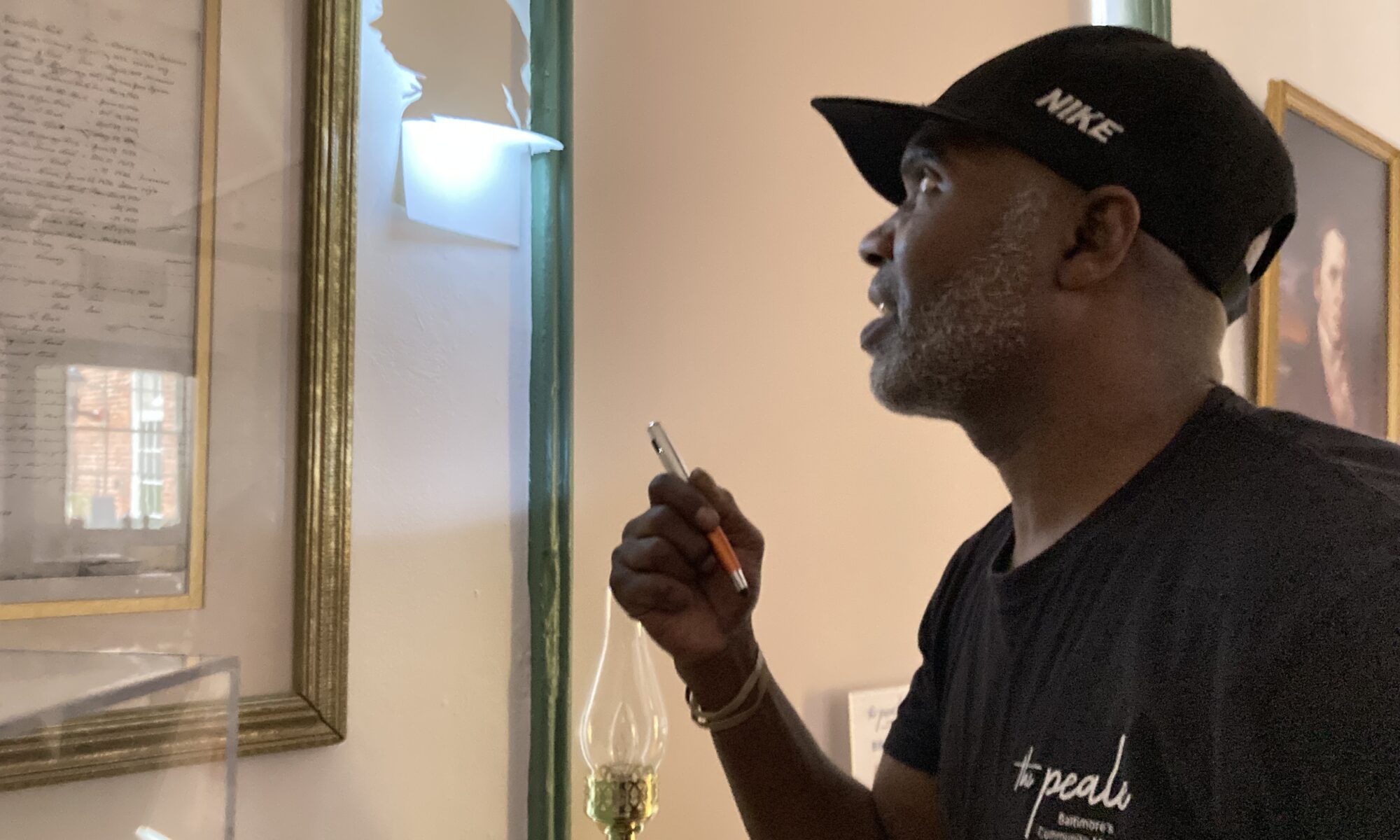
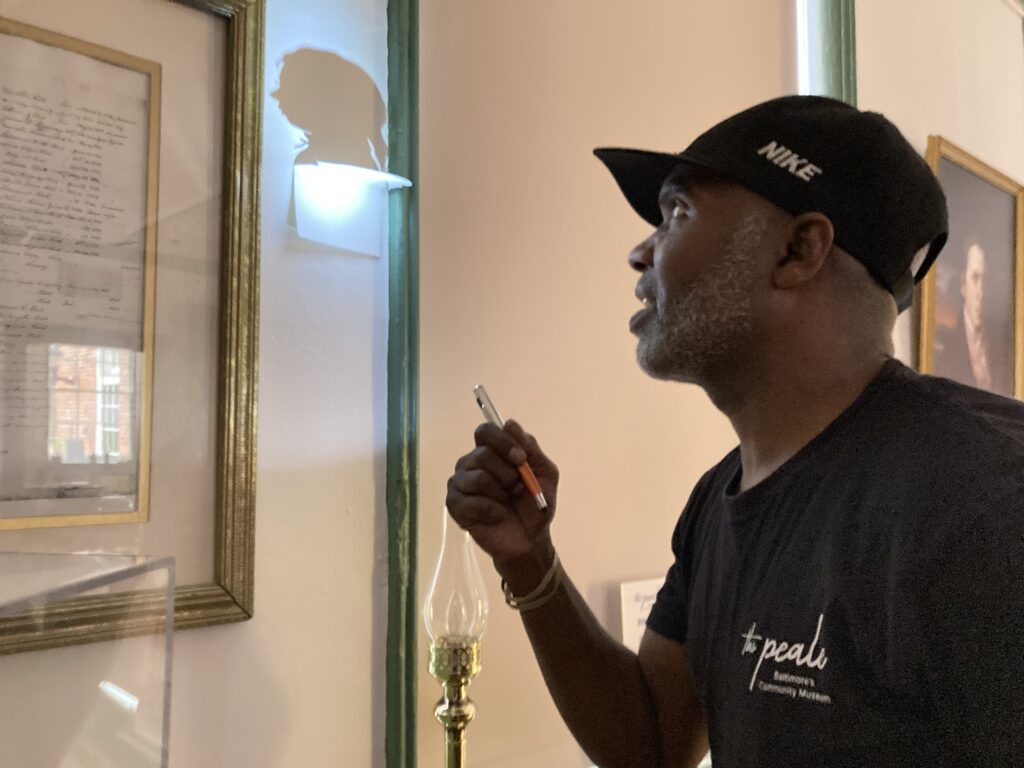
Daryl Lewis gives silhouette demonstration in Moses Williams Gallery

I’m delighted to share that on December first, Baltimore’s The Peale is opening a gallery named for Moses Williams, who was a silhouette cutter at Peale’s Museum in Philadelphia between 1803 to about 1827.

Daryl Lewis demonstrates a silhouette panel at the Peale Museum, Baltimore, 2023.
Daryl Lewis demonstrates a silhouette panel at the new Moses Williams Gallery at The Peale, Baltimore, 2023

Williams, born about 1776, was a skilled silhouette artist, born into slavery; he and his parents were enslaved by Charles Willson Peale. His parents gained their freedom and Williams grew up working in the Peale family’s Philadelphia Museum, where he learned to prepare and install exhibits.  In the summer of 1799, Williams learned taxidermy as an assistant to Peale, preparing birds collected on the New Jersey Shore. In 1801, he worked mounting the skeleton of the mastodon, and in 1803 became a silhouette cutter at the museum, on the second floor of Independence Hall.  Williams was literate,  probably picked up a bit of Latin, placed his own advertisements in the local newspaper, bought land, owned a home, and was known in the local community. 

Williams, the first Black museum professional in the U.S., now has a center and a gallery named in his honor.  Moments in his life are illustrated by silhouettes that visitors can see with a penlight as they go through the gallery as seen above.

Silhouette of Moses Williams, Cutter of Profiles, 1802
“Moses Williams, cutter of profiles”, silhouette, 1802

Today, the Moses Williams Center is the Peale Museum’s teaching gallery and home to the Accomplished Arts Apprenticeship program, which offers training in exhibition preparation and the historic preservation trades. Their recruiting fairs for the program happen the third week of October for this 32 week program. Launched in 2020, this paid apprenticeship consists of “non-traditional mentorship and vocational training in fine art, curatorial practice, art installation, logistics, and historic building preservation to develop transferable skills using arts as the driving force.”

This is a wonderful way to memorialize Moses Williams’ skills, creativity and resilience. It is in stark contrast to the withering account of him and his family given by Rembrandt Peale in “The Physiognotrace.” published in an 1857 issue of The Crayon. My guess is that this was such an awful perspective that Lillian Miller found she could not bear to discuss it in her bibliography for her catalog, In Search of Fame: Rembrandt Peale 1778-1860. While Peale’s account held no expectations for Williams’ person or future, it is, ironically, the main building block for understanding the context that Williams lived and worked in.

Enslavement, the slave trade and Native dispossession are no longer marginal to the story of Peale’s Museum in Philadelphia. Moses Williams is now a very visible ancestor.

See my “Racial Theory, Museum Practice: The Coloured World of Charles Willson Peale.” Museum Anthropology, 1996. You can download a copy here.